• Skip to main content
  • Skip to secondary menu
  • Skip to footer

Ice Skating Passion

There is not better feeling...

  • BEGINNER
  • FIGURE SKATING / DANCE
  • ICE HOCKEY
  • SPEED SKATING
  • ABOUT
  • STORE

Articles by Claire

8 Best ice hockey mouthguards (2022) + tips to choose

Last updated on January 20, 2022

With the puck flying fast and the stick moving all around, ice hockey can be dangerous for your teeth.
Wearing a mouthguard is essential. 
But which one? There are so many to choose from...
Below is my guide with the answers to your questions, the criteria to choose the best option for you and my selection of the best hockey mouthguards to consider.

Best ice hockey mouthguard Pin2

Table of Contents
Best hockey mouthguards - summary
Ice Hockey Mouth Protections - FAQs
How to choose an ice hockey mouthguard - criteria
Reviews of the best mouthguards for ice hockey players - Boil & Bite
Reviews of best hockey mouthguards for braces
Best ice hockey mouthguard for airflow
Custom hockey mouthguard 
How to take care of your hockey mouthpiece

This article may contain affiliate Links (info on the Disclosure page). If you purchase using my link, I get a commission at no extra cost to you.


Best hockey mouthguards - summary

Ice hockey has many benefits. Wearing good protection limits the few negatives.
The mouthguard is an essential piece of equipment when playing ice hockey at any age.
You can choose a protection that is:

  • resistant
  • comfortable
  • easy to clean
  • with good shock absorption

It will prevent chipped or lost teeth, as well as soft tissue damage, in case of impact with a puck or a stick (they move quite high!).

why wear best mouthguard for hockey players - stick danger

In the following article, I will enter into details about the criteria to choose the best mouth guard options for you.
But let's start with an overview of my section of the best options to consider. Detailed reviews come further down in the article.

Absolute best hockey mouthguards - professional use

The absolute one is made by a dental specialist based on your dental imprint taken by your dentist. This is what professionals do.

Another way to have a custom mouthguard for cheaper, is to purchase an Impact custom one. They send you a kit to create the imprint, and once they receive it, they will create the guard custom to your mouth. However, it is not as ideal as the dental specialist's one as you take the imprint yourself without someone guiding you.

Impact Custom

Buy it - See colors / Read reviews

Best mouth-formed guards - Boil & Bite

4 different brands for you to consider. 

  • Half-custom fit for better protection than stock guards
  • Comfortable 
  • Good value for protection, if you can't get custom ones
  • The Guardlab product has a new development to improve even more the fit

Shock Doctor Gel Max (Youth & adults)

Buy it - See colors / Read reviews

Guardlab Apex

Buy it - See colors / Read reviews

SISU Aero (Youth & Adults)

Buy it - see colors / Read reviews

For kids - Oral Mart

Buy it - See colors / Read reviews

Best hockey mouthguards for braces

For kids wearing braces, it is essential to purchase models that have been created especially for braces.
The material is a little softer and the shape adapted.

Shock Doctor double braces

Buy it - see colors / Read reviews

Shock Doctor braces

Buy it - See colors / Read reviews

Mouthguards for those who have difficulty

Finally, if the player is having difficulty wearing a mouthguard:

  • feeling like he/she can't breathe
  • having headaches

Consider a system that is designed to breathe better. It is a little bigger but allows more airflow.

Shock Doctor Max Airflow

Buy it - see colors / Read reviews

Mouthguard case

And if your guard does not come with a case, make sure to purchase one so that it lasts longer!

Shock Doctor Mouthguard case

See all colors

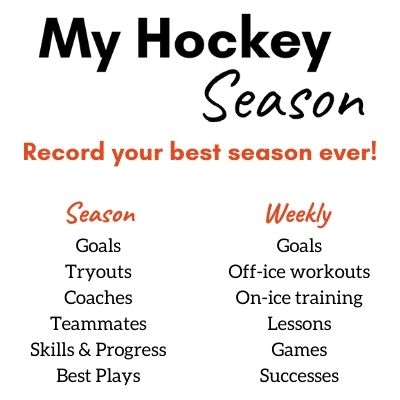
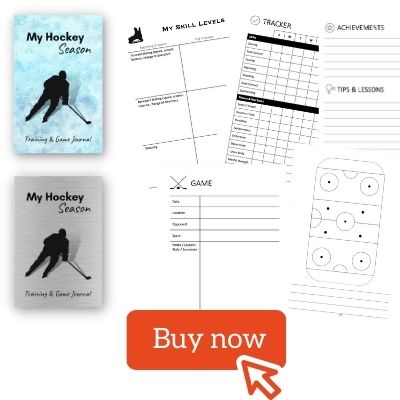
Season Hockey Training Log notebook
Season Hockey Training journal notebook

Ice Hockey Mouth Protections - FAQs

Before I list the most important criteria to help you choose your mouthguard and review the ones selected above, let me answer your most frequently asked questions about mouth protections for ice hockey.

Why wear a mouthguard when playing hockey?

A mouthguard is a useful protection when playing many sports.
In the case of hockey, the player can receive a puck or a stick in the face during the heat of the action. The pucks do travel fast!
A mouth guard protects:

  • The teeth - this is the primary function of the guard
  • The jaw - the jaw can be hit too. It does not protect the entire jaw, but as it absorbs the shock in can reduce jaw injuries.

When to wear it

At practice and during a game.
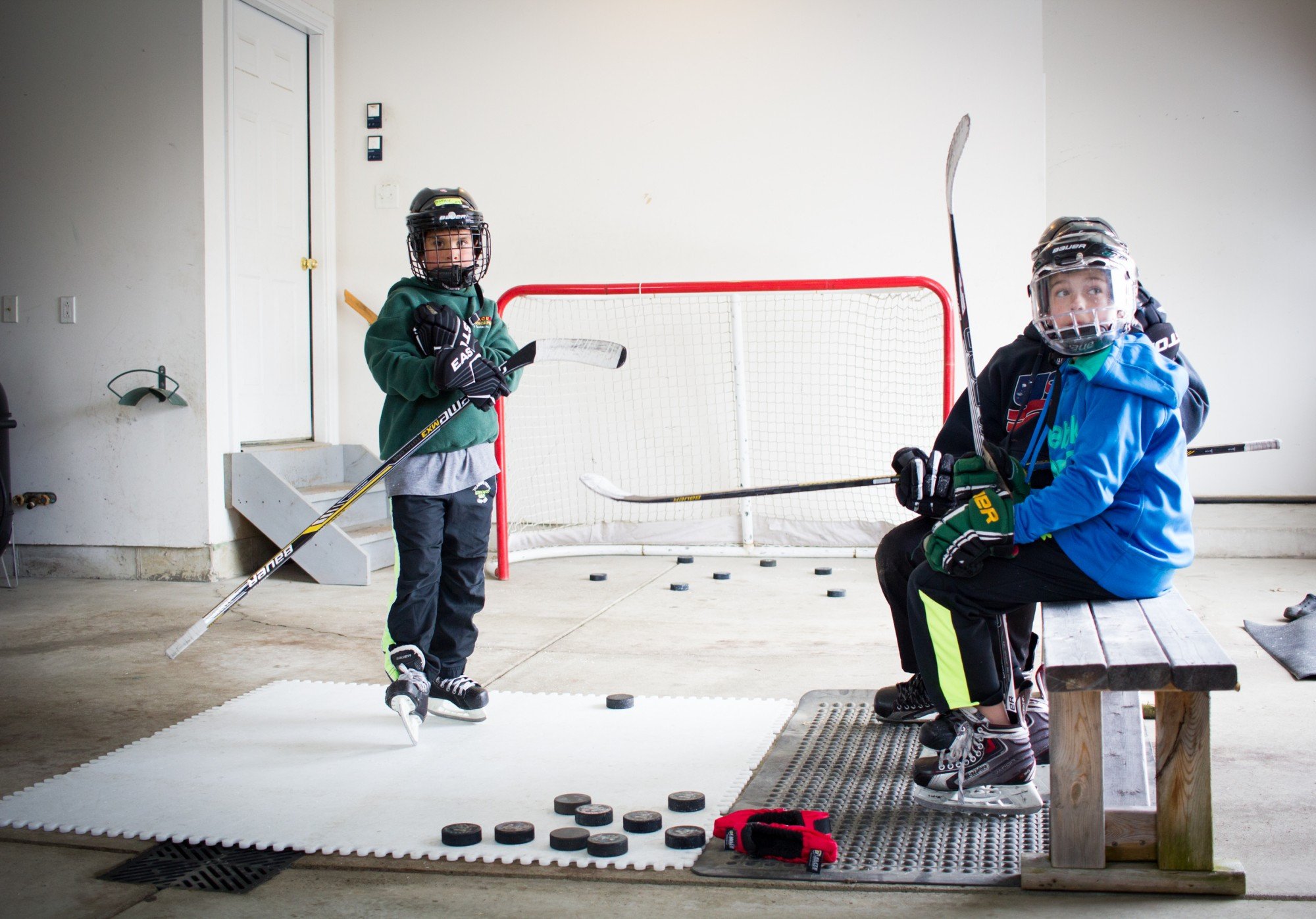
But also ,when practicing off-ice with a puck and sticks with friends on a shooting pad.

Do mouthguards actually work?

For teeth and jaws protection, yes. Scientific studies have demonstrated that they reduce the injuries.
Wearing a mouthguard reduces the number of fractured teeth.
According to the American Dental organization (ADA), an athlete is 60 times more likely to suffer harm to the teeth when not wearing a mouthguard (source)

best ice hockey mouth guard

Do mouthguards prevent concussion?

One of the most frequent question asked by hockey parents is: do mouthguards prevent concussions.
As of today, no scientific study has concluded that they would be effective (either standard or fitted).

Maybe, if the blow is at a certain angle, the shock absorption could reduce the cranial impact. However, your best bet for protection is the helmet and a good maintenance of this helmet (don't forget that each impact reduces its effectiveness).

There is no study proving that, and it would depend on the position of the blow. But in certain instance, the shock absorption could reduce the internal cranial shock.

Is a hockey mouthguard the same as for other sports?

There is no specific requirement compared to other sports.
The most important is that it fits the mouth properly (see criteria in next section).

Should young kids wear mouthguards?

Considering kids do not have they definitive teeth, parents may wonder if wearing a mouthguard is a good idea and if it can have a negative impact on the dental structure.
Here are some points to consider:

  • Losing a baby tooth prematurely can impact the child’s permanent tooth afterwards - the baby teeth help guide the adult teeth into the correct position
  • It reduces the impact on the jaw and the foundations on which the permanent teeth do grow
  • I have not seen any counter-recommendations for wearing a mouthguard young. Most designs start for kids age 6 or 7. However morphology of the mouth can vary a lot at this age. If pre-made guards do not fit properly, check with your dentist. He may create a special custom one.

How to get a child to wear a mouthguard?

Let's be honest, wearing a mouthguard is not the most enjoyable part of sport. But it is essential.
As a hockey mother, to help your kid wear one consider:

  • First make sure it fits properly. A bad fit makes it very uncomfortable
  • Choosing his/her favorite color - most brands offer many colors and cool designs
  • Show his/her favorite NHL player wearing a mouthguard
  • Add flavor to the mouthguard
  • Choose a version with an extra opening for airflow, if he/she feels like breathing is difficult 

Note - if choosing a boil and bite protection for a kid, it may not hold naturally to the teeth like the adult versions do.  It is because children' teeth have less surface area to grip. 

mouthguard child impact

How often should a mouthguard be changed?

Mouthguards should be changed:

  • at least every year (length of most warranties)
  • if there is wear and tear
  • if the kid has grown significantly during the season

Best to bring it to your dentist to get his/her opinion.

What are the Official Rules? 

USA Hockey Rulebook
Rule 304 protective equipment (f) - source
"All s, including s, in the 12 & under (Youth and Girls’) through Youth 18 & under (including High School) and Girls’ 19 & under age classifications are required to wear a colored (non-clear) internal mouthpiece that covers all the remaining teeth of one jaw, customarily the upper. It is strongly recommended, in all classifications, that all s wear a mouthpiece form fitted by a dentist."

Hockey Canada Rule book
Rule 3.6 Protective equipment (g) - source
"For divisions of hockey that allow the wearing of the half visor, the wearing of a mouth guard is compulsory (recommended but optional for Senior hockey). When a player fails to properly wear a mouth guard at any time on the ice during the game, their team shall receive one warning. Any player on that team who commits a subsequent infraction will receive a Misconduct penalty. Referees are encouraged to deliver this warning directly to the Coach. "

How many NHL players wear them?

At the moment there are not rules that force NHL players to wear a mouthguard.
However, each NHL team has custom mouthguards molded specifically for each player.
It seems that 60% of player are wearing them, an increasing trend.
Broken teeth are not a cool factor anymore.

funny ice hockey quote dental records numbers

Read more hockey quotes and sayings

Hockey Playbook

How to choose an ice hockey mouthguard - criteria

Types of mouthguards

There are 3 main types of mouthguards you can consider purchasing:

  • Stock mouth guards
    Models you can buy where one size fits all (well 2 or 3 sizes: youth / adults) and start using right away 
    Pros - direct use upon receiving, cheaper
    Cons - not-customizable, less effective, limits breathing (as the player needs to hold it in place)
  • Mouth-formed (a.k.a. Boil and Bite)
    Most common type of mouth protectors. System to customize a little to the teeth layout.
    Process 1- Boil and Bite - Made of thermoplastic, they can be boiled to soften the material so that it molds to the teeth
    Process 2 - Shell-liner -made of acrylic material -it is poured into an outer shell, creating a lining that is molded with the player's mouth.
    Pros - good middle ground, partially customized
    Cons - limited in size (does not always cover all the teeth)
  • Custom-made
    Made to your dental imprint by a dental professional. Everyone's jaw and teeth implantation is different. With a custom protection, it is best adapted to the player's needs.
    Pros - best protection, best comfort, can be adapted to braces and orthodontics, less likely to fall out accidentally
    Cons - more expensive
Custom mouth guard dentist

Shapes

When purchasing stock or mouth-formed products, check out the shape.
As they are not custom-made, the companies create different shapes to adapt to various mouth shapes:

  • Youth vs adult versions
  • Mouthguard for braces
  • With added airflow

Strapped / Strapless

The strap is used to secure the mouth guard to the helmet.
Some straps also have a safety release feature for the guard to break away under a certain amount of pressure.

  • the straps help coaches and officials see that the player is wearing a protection
  • the straps reduce the risk of losing or damaging the guard

Material

Different materials are used to create mouthguards. Make sure you choose one that is:

  • Water-resistant (contact with saliva)
  • Resistant (no point in buying one every month)
  • Health-safe - e.g. BPA-free
  • Shock absorption - Rthylene Vinyl Acetate (EVA) and Polyurethane (PU) are some of the best 
  • Easy to clean
ice hockey mouthguard reviews criteria color

Comfort / Fit

This is one of the most important criteria to consider.
If the mouthguard is not comfortable, it means that:

  • The player will not want to wear it
  • It does not fit properly, thus protects less

The player might need to try several brands before finding the right one.

Color / Style

There are so many styles of mouth protectors! The manufacturers are having fun, for example:

  • Clear
  • Branded
  • One color
  • With drawings such as teeth of camouflage
  • With flavors - yes, you can even find some with specific flavors such as raspberry, lemon lime, mint, bubble gum...

Dental warranty

Some products come with a dental warranty - the company will pay for dental costs in case of an injury. But make sure you read the fine prints, there are lots of conditions, including sometimes registering your gum shield.


Figure Skating gift banner Zazzle 3
ice hockey accessory gift banner
Ice hockey notebook goalie red
Ice Hockey mug skate pairs black white
Ice Hockey skate towel black white
BUY +  PERSONALIZE

Reviews of the best mouthguards for ice hockey players - Boil & Bite

Review of Shock Doctor Gel Max mouthguard

  • Brand - Shock Doctor
  • Type - Boil & Bite
  • Material / Design - Gel-fit Liner Technology + Exoskeletal Shock Frame + Triple Layer
  • Strapped or strapless (convertible tether)
  • Flavor - optional
  • Colors - many colors available
  • Sizes - Youth and Adult
  • Comes with case - no

Buy it - See colors / Read reviews

Review of Guardlab Apex mouthguard

  • Brand - Guardlab
  • Type - Boil & Bite - with “APEX Bite Pattern” that pre-indents where to bite - best for accurate fit - Recognized improvement for best fitting to your mouth!
  • Material / Design - using 3D printing - material said to be 150% more absorbent
  • Strapless
  • Flavor - no
  • Colors - several colors available
  • Sizes - Small, Medium and Large
  • Made in USA
  • Comes with case - yes

Buy it - See colors / Read reviews

Review of SISU Aero mouthguard

  • Brand - SISU
  • Type - Boil & Bite 
  • Lighter and thinner
  • Material / Design - different pattern with crumple zones to absorb impact forces + Perforation pattern for comfort and protection
  • Strapless
  • Flavor - no
  • Colors - many colors available
  • Sizes - Small, Medium and Large
  • Comes with case - no

Buy it - see colors / Read reviews

Review of Oral Mart mouthguard

  • Brand - Oral Mart
  • Type - Boil & Bite 
  • Material / Design - Inner Gel Layer + Outer Impact layer
  • Strapless
  • Flavor - no
  • Colors - many colors available
  • Sizes - youth (12 and below)
  • Comes with case - yes

Buy youth version - See colors / Read reviews

Buy Adult version - See colors / Read reviews


Reviews of best hockey mouthguards for braces

Review of Shock Doctor Double Braces mouthguard

  • Brand - Shock doctor
  • Type - Stock - No molding
  • Protects both upper and lower teeth
  • Material / Design - medical grade silicone - designed to sit on top of the brackets + integrated ventilation channels
  • Strapped or Strapless
  • Flavor - no
  • Colors - 4 colors 
  • Sizes - Under 12 or over 12
  • Comes with case - no
  • Made in the USA
  • Dental warranty

Buy it - see colors / Read reviews

Review of Shock Doctor Braces mouthguard

  • Brand - Shock doctor
  • Type - Stock - No molding
  • Protects the upper teeth only
  • Material / Design - medical grade silicone - designed to sit on top of the brackets + integrated ventilation channels
  • Strapped or Strapless
  • Flavor - no
  • Colors - 5 colors 
  • Sizes - Youth or Adult
  • Comes with case - no
  • Dental warranty

Buy it - See colors / Read reviews


Best ice hockey mouthguard for airflow

Review of Shock Doctor Max Airflow mouthguard

  • Brand - Shock doctor
  • Type - Stock - No molding
  • 10% more flow capacity via Airflow breathing channel
  • Material / Design - Shock Doctor polymers and integral bite pads - Design made to relax the jaw and not block the breathing channel
  • Strapped or Strapless (Quick release tether)
  • Works with Braces
  • Flavor - no
  • Colors - several colors available 
  • Sizes - Youth or Adult
  • Comes with case - no
  • Dental warranty

Buy it - see colors / Read reviews


Custom hockey mouthguard 

Review of Impact custom mouthguard

  • Brand - Impact Custom mouthguard
  • Type - Custom - easy to use impression kit, includes paid postage to dental lab
  • Material / Design - 5mm, heavy impact absorbent, optimal oxygen flow
  • Strapped or Strapless (Quick release tether)
  • Works with Braces
  • Flavor - no
  • Colors - many colors and styles available 
  • Sizes - custom
  • Comes with case - yes

Buy it - See colors / Read reviews


How to take care of your hockey mouthpiece

It is essential to take good care of a mouthguard because:

  • If it is damaged, it will not protect as well
  • If it is not clean, it can gather bacteria - this could lead to a infection

6 steps to take care of your guard

  1. Rinse before and after each use
  2. Check after each use to see if there is any wear and tear (replace if this is the case)
  3. Do not expose the mouth guard to sun or hot water (to minimize distortion of its shape)
  4. Do a regular deep cleaning (see next paragraph)
  5. Bring it to your dentist for her/him to check it out and advise on wear and tear
  6. When not in your mouth, keep it protected in a case that is sturdy and has vents for air circulation. Guard must not bend inside.

Shock Doctor Mouthguard case

See all colors

How to do a deep cleaning of a mouth guard

  • Option 1
    Brush with a toothbrush and toothpaste 
  • Option 2
    Clean in cool water with soap and rinse thoroughly
  • Option 3
    Soak it in denture cleaner / mouthwash
  • Option 4
    Clean with specific mouthguard cleaners

Buy it / read reviews

Buy it / read reviews

Figure Skating gift banner Zazzle 3
ice hockey accessory gift banner
Ice Hockey mug player silhouette red
Ice Hockey skate towel player red
Ice Hockey mouse pad favorite season silver
BUY +  PERSONALIZE

Complete your hockey equipment set!

Other protective gear to get for hockey players:

  • Best hockey helmets - read article
  • Best hockey gloves for players - read article
  • Best hockey shin guards - read article
  • Best hockey elbow pads - read article
  • Best hockey shoulder pads - read article

And if you want to work out off ice:

  • 10 essential elements to cover in your off-ice workouts - read article
  • 10 best off-ice hockey training equipment - read article
  • Best hockey shooting pads and tiles - read article
  • Best slide boards for hockey training - read article
  • Best synthetic ice for hockey players - read article
  • Best net targets and shooting tarps - read article
  • Best hockey passers and rebounders - read article
  • Best balance boards for hockey players - read article
  • Best stick handling tools - read article

Share it on your favorite social media!

Best hockey mouthguard Pin1
Best hockey mouthpiece Pin1

6 Best hockey shooting pads (2022) – tips + reviews

Last updated on January 20, 2022

Want to work on your hockey skills off the ice? There are now many solutions making it possible. 
Below is my guide to help you find the best hockey shooting pads for your needs: durability, quality of the slide, ease of setting-up...
Great options to work on your shooting and stick-handling skills.

They make great gift ideas for hockey players!

Best hockey shooting boards pads tiles Pin1

Table Of Contents
Best hockey shooting pads - Summary
How to choose a hockey shooting board
Reviews of the shooting pads
Reviews of the best shooting tiles - options for large shooting pads
Reviews of the best shooting surface - synthetic ice
How to take care of your shooting pads and tiles
3 Drills to practice & other equipment to help
Homemade hockey shooting pad DIY - how to make your own

This article may contain affiliate Links (info on the Disclosure page). If you purchase using my link, I get a commission at no extra cost to you.


Best hockey shooting pads - Summary

Time to practice on the ice is limited. So, if you want an edge (or even just because you love it), shooting pads are a great solution to practice both your shooting skills and your stick-handling skills.
However for them to be useful they need to be:

  • of good performance - stable and sliding well, as close as possible to ice
  • durable - you don't want them to break on the first practice!
  • adapted to your needs - is it a fixed set up or do you need to move it frequently?

I will enter into the details of criteria and products in the next sections. But first, this is the summary of my choices for best hockey shooting pads:

Best hockey shooting pad - stiff board format

  • Smooth glide
  • Easy to move with a handle
  • Option to purchase with or without a passer to help with practice

You can find higher-end product, but the reality is that none can really compete with ice. It can't be as smooth. Read the reviews and you will see that price does not really mean better surface.

Hockey Revolution board with passer

Buy it / read reviews

Hockey Revolution board only

Buy it / Read reviews

Sniper's Edge Pad (3 sizes available)

Buy it / Read reviews

Best hockey shooting tiles (interlocking)

  • Create the surface shape and size you want - great to maximize your training options and practice with a friend
  • However, you want to choose the location, set it up and not move it
  • Option is to have a kit with color-coded tiles and passers, in order to practice specific skills with accuracy 

20 Sniper's Edge Tiles (20sq ft)

Buy them / read reviews

Hockey revolution tiles (choose quantity)

Buy them / read reviews

Hockey revolution practice trainer set

Buy them / Read reviews

Best hockey shooting training surface - synthetic ice

  • A more complete off-ice training experience: you can skate on them! 
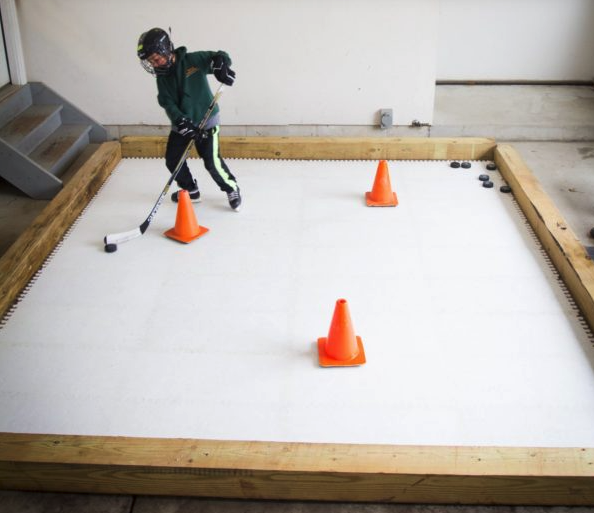
  • Buy as many panels as you want and create the rink size you need for practice
  • More expensive
  • However, note that it is not ice. It cannot be as smooth as ice. This is as close as you can get with a manufactured surface.
  • Learn more on my article about the best synthetic ice for hockey training
best Synthetic ice skate anytime starter kit

Buy 8 panel - starter kit

Best synthetic ice panels skate anytipme deluxe starter kit

Buy 20 panel - Deluxe starter kit

Note: remember that they do imitate ice. So, they are slippery when walking on them! Be careful.

Season Hockey Training Log notebook
Season Hockey Training journal notebook

How to choose a hockey shooting board

Why do your need a shooting board?

Time to practice on the ice is sadly limited (unless you have your own private ice rink... one can dream).
This is no reason not to practice though. Even if you can't skate, you can still work on other elements of hockey playing:

  • stick-handling of the puck
  • shooting

You can try practicing on the ground, but your stick will get damaged and the sensation is just too different.
This is why you need a specific off-ice training equipment: a shooting surface. It imitates the ice for your stick to glide on it.

But how to choose it?

Different formats are possible: 

  • pads (stiff boards)
  • interlocking tiles
  • synthetic ice

They can all be a good option. It really depends on your needs and budget.
Therefore, I am listing below the different criteria to consider when choosing the best shooting board for you.

Note - if practicing on shooting pads with friends, don't forget your mouthguards (the puck can go fast and stick can go up!)

control stick handling practice board hockey

Material - quality of surface

The first criteria that is essential is that the surface allows your pucks and stick to glide. Otherwise, there is no point.
This is why the most important here is to read the reviews on the marketplaces. This is how you will know if the claims of how slick the surface is, are really true.

However, note that it can never be as smooth as ice!

Durability

You don't want a shooting pad that is slick for 5 practices and then it is over.
It is quite an investment.
However, take the reviews with a grain of salt; Some will complain that their pads are not working any longer, but they might not have cleaned them or may have left them outside for dust and elements to fall on them.

Portability - where will it be used

Where will you practice?
In a fixed place in the basement, in the garage and sometimes outdoors? Do you need to move it?
The answers to those questions have a big impact on your choice.

Think it through before buying anything, otherwise you may regret your purchase.

The best option if your need a portable board, is the pad. Most of them have a handle, making them easier to transport.
The tiles should not be attached and de-attached frequently if you want to keep a smooth surface.

Size - how large should your shooting pad be?

For the pad, you have no choice, they are a fixed size.
However, if you are using tiles, you can add has many as you want in both directions. It gives you more flexibility on defining your training surface.

The size of your surface should be based on:

  • your budget
  • the space you have to set it up
  • what you want to work on (a bigger surface means more exercises possible) - passing exercises, for example, required more space.
  • the size of the player

You need at least enough room to do wide movements in both directions, otherwise there is no point.
 A 4ft-long pad feet is borderline in terms of space for an eight-year-old to practice wrist shots.

best ice hockey practice board

Price

  • Stiff boards and roll-up mats are normally some of the cheaper options
  • The price of tiles will depend on how many you purchase. The surface is often bigger, so the price is normally higher. Plus, you can start small, and add as your budget increase.
  • The synthetic ice is the most expensive option, as it is a more technical product that offers you the possibility to skate on it.
  • The cheapest option is a DIY shooting board. See instructions at the end of this article. But know that the quality of the glide cannot be the same.
ice hockey gift banner
Figure Skating gift banner Zazzle 3
Ice hockey blade absorbent towel born to play blue
Ice Hockey Notebook (red skate with hockey words)
Rather be playing - Speed blue hockey player T-Shirt
 BUY +  PERSONALIZE

Reviews of the shooting pads

Pros of the boards

  • Easy to transport
  • Do not need large surface to practice

Cons of the boards

  • Limited size
  • Cannot skate on them

Hockey Revolution board only

  • Brand - Hockey Revolution
  • Size - 30x60in
  • 3/16 in thick, shooting surface of 1/8 inches thick
  • Portability: handle
  • Available with or without a passer to add other types of exercises
  • Can be used with an interactive training system
  • Made in Europe
  • Puck slides great

A good training set to practice many exercises. Recognized as a very smooth surface.

with passer

Buy it / read reviews

board only

Buy it / Read reviews

Sniper's Edge Shooting pad

  • Brand - Sniper's Edge
  • Size - 3 sizes available (34x48 in - 28x52 in - 30x60 in) - from 8 years old, the bigger size is recommended
  •  3/16 Inch Thick
  • Portability: Handle
  • Material: Slick Silicone Infused Surface
  • Can be set up on almost all surfaces - indoor and outdoor
  • Made in the USA
  • Does not roll up
  • Puck slides great

An overall good product for the price. The variety of size allow parents to purchase a small one for very young kids, before making a bigger investment.
The handle is practical to move it out of the way after practice.

Buy it / Read reviews


Reviews of the best shooting tiles - options for large shooting pads

Pros of the tiles

  • Size you want
  • Shape you want
  • Easy to assemble

Cons of the tiles

  • Not as easy to move to another location
  • Cannot skate on them

Review of the Sniper's Edge Tiles

  • Size of tile - 12x12 in
  • Quantity pack - 20 tiles in a pack
  • Material - premium grade with UV coated protection, weatherproof coating - can be used outside on blacktop, concrete, sport court and inside in garage or basement.
  • Easy to assemble - tiles just snap together
  • Available in blue and white
  • Made in the USA
  • Puck slides great

An excellent quality - price performance, considering the size of the practice area you can create

Buy them / read reviews

Review of the Hockey Revolution Tiles

  • Size of tile - 13x13 inches
  • Quantity pack - 4, 8, 15, 20 or 40 tiles in a pack
  • Material - can use them in both indoor and outdoor 
  • Easy to assemble - tiles just snap together
  • Made in Europe
  • Puck slides great


Buy them / read reviews

Review of the Hockey practice set

  • Size of tile - combination = 91 x 39.4 x 0.43 inches
  • Quantity pack - 21 tiles - with a mix of colors and symbols (15 white, 6 colored)
  • Material - can use them both indoor and outdoor 
  • Set includes 2 passers and an application
  • Made in Europe
  • Puck slides great

A great combination of products if you want more guidance for your off-ice training. The combos will make you work on a variety of drills and stick-handling manoeuvres. It is especially good because the app makes you react rather than repeat the same movement.

Buy them / Read reviews

ice hockey gift banner
Figure Skating gift banner Zazzle 3
Ice hockey player - sticker (black)
Ice Hockey t-shirt Favorite season fan blue
Ice hockey puck goalie silhouette black white
BUY +  PERSONALIZE

Reviews of the best shooting surface - synthetic ice

Pros of the synthetic ice

  • Size you want
  • Shape you want
  • Can skate on them

Cons of the synthetic ice

  • Not easy to move to another location
  • Need even more maintenance to avoid damaging your skates

Skate anytime Ice

One of the best synthetic ices to practice for hockey is the Skate Anytime material:

  • They have a starter kit with only 8 panels, but you can add to them or get kits with 20, 36, 60 or 136 panels! Up to an ultimate rink!
  • The tiles assemble easily 
  • Indoor or outdoor - Lab tested for UV and sunlight protection and warm weather
  • 5 years manufacturer warranty
  • Many raving fans
  • Just know that the skating needs some getting used to as it is not ice. It is as close as possible with manufactured material, but it cannot be ice.
best Synthetic ice skate anytime starter kit

Buy 8 panel - starter kit

Best synthetic ice panels skate anytipme deluxe starter kit

Buy 20 panel - Deluxe starter kit


How to take care of your shooting pads and tiles

As you practice and practice on your pads and tiles, the more the surface is going to lose sliding efficiency.
It is because there is a buildup of dirt and rubber.

However, it is essential they remain slick for the quality of your training.

  • Before anything: Read the manual for tips specific to your surface.
  • When not in use, protect them with a plastic cover or tarp, to reduce the quantity of dust falling on them (don't use fabric covers, as pieces of fabric may fall on the surface and create imperfections)
  • Clean them up frequently so as to avoid frustration and change in slickness
  • Even if they say you can park on it, don't - try to set them up in a place dedicated to training so as to limit interaction with shoes and others... you don't want to spend an hour cleaning before each practice
  • If compatible with the material (check the manual) - Spray an all-purpose cleaner, stand on a clean and absorbent towel and shuffle your feet around the surface. Some also spray furniture polish after that.

3 Drills to practice & other equipment to help

There are many more you can do, check with your coach and check videos online. And don't forget to wear your hockey gloves to imitate on-ice practice!
But to get you started, here are 3 drills you can practice on those shooting pads or tiles - to be part of your hockey off-ice workouts:

Stick controlled jumps

  • Pick up a puck off the surface with your stick
  • Make it move along your stick by tiny jumps
  • Try on both side of the stick

Flip pucks into bucket

  • Dump several pucks on your surface
  • Place a bucket in the middle
  • Try flipping the puck straight it (or flip in the air and smack it down)

Make it more fun by training with a friend and counting how many times it goes in or not.

Figure 8

  • Set up 2 pucks in front of you in front of your 2 feet
  • Draw a figure 8 around them with your stick
  • Set the pucks in front of each other and repeat
  • You can add pucks to increase the challenge of moving the stick around

Complete your set up - other off-ice equipment to practice

You can also get further off-ice training equipment to help you practice your stick-handling and shooting:

  • Pucks, of course, to be able to repeat your exercises several times in a row
  • Goal targets or strong tarp with a goalie to practice precision of your shooting (but don't buy low quality as it will rip very fast) - see my article about the best hockey targets
  • Passers rebounders - to imitate receiving a pass - see best options
  • A training aid to create more shapes to practice around with your stick - see best options
  • And you can combine with a slide board to imitate the skating - see the best slide boards for hockey training
  • Or combine with a balance board to improve balance and hand-eye coordination - see the best balance boards for hockey training

Read reviews and buy on Amazon 

or Read reviews & Buy green or orange on Pure hockey

Buy / Read reviews

Buy / Read reviews

Snipers edge pass master passing station on Pure Hockey

Buy it / Read reviews on Pure Hockey

Buy pucks

Get the balance board - Read reviews


Homemade hockey shooting pad DIY - how to make your own

If you budget is limited, it is possible to create your own shooting pad for cheaper.
However, know that the materials available at the hardware store will not be as slick.

  1. Decide the size you want your pad to be (length and width)
  2. Buy boards at the hardware store - options are melamine boards, thrifty tiles or high-density polyethylene (HDPE) boards 
  3. Apply silicon lubricant or furniture polish onto the surface
  4. Rub it in every little corner 
  5. Wipe away the excess of product
  6. Let it dry out completely
  7. Reapply silicon lubricant or furniture polish to the surface - as needed after multiple uses.

Get Silicon Lubricant

ice hockey gift banner
Figure Skating gift banner Zazzle 3
Ice Hockey puck player silhouette turquoise
Ice hockey notebook goalie red
Ice Hockey mug skate pairs black white
BUY +  PERSONALIZE

Complete your hockey equipment set!

Protective gear for hockey players:

  • Best hockey helmets - read article
  • Best hockey gloves for players - read article
  • Best hockey mouthguard - read article
  • Best hockey shin guards - read article
  • Best hockey elbow pads - read article
  • Best hockey shoulder pads - read article

And to work out off ice:

  • 10 essential elements to cover in your off-ice workouts - read article
  • 10 best off-ice hockey training equipment - read article
  • Best hockey shooting pads and tiles - read article
  • Best slide boards for hockey training - read article
  • Best synthetic ice for hockey players - read article
  • Best net targets and shooting tarps - read article
  • Best hockey passers and rebounders - read article
  • Best balance boards for hockey players - read article
  • Best stick handling tools - read article

Share it on your favorite social media!

Best hockey shooting tiles Pin1
Best hockey shooting pads tiles Pin2

Figure skating levels, tests and ages (USA) – explanations

Last updated on April 24, 2021

Getting confused with all the figure skating levels in the US? Want to better understand the evolution, requirements, test systems and classic ages. Below is a guide to better understand the US ice skating levels and skills.

ice skating levels ages tests Pin1

Table of Contents
Figure skating Levels and tests - Introduction FAQs
Basic ice skating levels - beginners
Figure skating levels & ages (single and pair)
Ice Dance Levels and Test
Adult Figure Skating Tests
Synchronized skating levels
Figure skating test GIFT IDEAS

This article contains affiliate links. If you purchase using my link, I get a commission at no extra cost to you (learn more).


Figure skating Levels and tests - Introduction FAQs

How many levels are there in figure skating?

There is a hierarchy in figure skating.  Levels have been predefined.
For all disciplines of figure skating there are between 6 and 8 official levels
They are based on technical difficulty, with required technical moves and program requirements.
To move from one level to another you take a test.  

Note: for beginners there are also 8 "pre-levels", to test progress on basic ice skating skills. 

I am listing the various levels and skills in further sections.

figure skating level skills

Why take figure skating level tests?

There are 2 main reasons why you or your kid should take figure skating tests:

  • To be able to enter qualifying competitions and if you do, check out my competition checklists
  • To challenge the skater, have a goal during practice and improve skating abilities 
Figure Skating Training journal Ad 1a
Figure Skating Training journal Ad 2

How do you take ice skating tests?

There are 2 ways to take ice skating test

  • During scheduled test sessions organized by figure skating clubs (more frequent for lower levels, less as you progress)
  • By submitting a competition protocol from a sanctioned competition for free skate and free dance (juvenile-senior levels and selected adult levels)

The standards (skills, expectations, rules) for all tests are specified in the current version of the U.S. Figure Skating Rulebook.

You can take tests for

  • Moves in the Field - technical tests for figure skater solos and pairs - To master the positions, edges, and turns necessary for figure skating
  • Free skate
  • Free dance

You must have passed the Moves in the Field of a certain level before being able to take the Free skate of that same level.

Certificate and Badges

When passing, the skater gets a certificate and a badge from the figure skating club on behalf of the U.S. Figure Skating Association.
The names of skaters who have passed the test are as also listed on the U.S. Figure skating website.

As a skater advances, the tests become more difficult, so each test passed is a definite cause for celebration.
You can also purchase medals and pins for yourself or your kid.
Or if you are looking for something different check out my gifts for these occasions. They can be personalized with the name of the skater (or with a club name), the level and the year:

Figure skating test level year gold keychain
Personalize and Buy
Figure skating test level year pink keychain
Personalize and Buy
Figure skating level test year blue ice magnet
Personalize and buy this magnet
Figure skating test level year pink cake topper
Personalize and buy this cake topper

See my Zazzle collection of figure skating test congratulatory gifts or check out more ideas at the end of the article

What if I or my kid fail an ice skating test?

This can be disappointing, but it is not dramatic.
You can take and re-take the same test as many times as you need to pass (with an interval of 28 days between each attempt).

Your coach or the comments on the form can tell you the reason why you failed. Keep practising and enjoy the journey!

US Figure skating vs ISI

In the rink closest to you, you may learn about different levels as those listed in this article (alpha, beta... ISI levels 1 to 10). 
Those levels have been established by the ISI (Ice Skating Institute).
What is the difference and implication you may ask?

  • The US figure skating is the national governing body for figure skating in the States (recognized by the International Skating Union (ISU) and the Olympic Committee).
  •  The Ice Skating Institute is an organization of participants of all aspect of the sport (ice rink owners, instructors, trainers, builders, suppliers...) to support the development of ice rinks and provide and promote ice skating.
  • They both allow participation is competitions they organize under certain conditions such as membership, for example.
  • There are correspondences between test levels

This article focusses on the US Figure skating levels.

What are "Gold Medalists"?

Figure skaters that pass some of the highest tests in figure skating become U.S. Figure Skating Gold Medalists e.g.:

  • Senior Freeskating 
  • Senior Moves in the Field
  • Gold Dance
  • Senior Free Dance
  • Senior Pairs
Figure skating level gold medalist

Adaptative skating

There are also levels and tests for adaptative skating.
Learn more on the US figure skating website.


Basic ice skating levels - beginners

Even before you start going through the Figure skating level tests, kids can have goals and see progress thanks to ice skating teaching systems with levels.
Ice skating moms, you should know that the 2 most commons taught in group sessions are:

  • The Snowplow Sam (4 levels)
  • The Basic Eight (8 levels)

These give you a good common basis for all disciplines of figure skating. Once you have passed them all you can choose to specialize: single, pairs, ice dance, synchronized skating.

Not one system is better. Just follow the one available at the rink.

The Snowplow Sam

4 progressive levels to introduce the basics of ice skating to those who have never skated before: Agility, Balance, Coordination and Speed, with learntoskateUSA.
Its image is a fuzzy bear. Designed for kids typically between 3 and 5 years old.

Snowplow Sam 1

  • Sit and stand up with skates on – off-ice
  • Sit and stand up – on-ice
  • March in place
  • March forward (8-10 steps)
  • March, then glide on two feet
  • Dip in place

Snowplow Sam 2

  • March followed by a long glide
  • Dip while moving
  • Backward walking, toes turned inward, shifting weight (4-6 steps)
  • Backward wiggles (6 in a row)
  • Forward swizzles (2-3 in a row)
  • Beginning snowplow stop motion – in place or holding onto barrier
  • Two-foot hop, in place (optional)

Snowplow Sam 3

  • Forward skating (8-10 strides)
  • Forward one-foot glide, two times skater’s height (R and L)
  • Forward swizzles (4-6 in a row)
  • Backward swizzles (2-3 in a row)
  • Moving forward snowplow stop (two-foot)
  • Curves

Snowplow Sam 4

  • Forward skating
  • Backward two-foot glide, length of skater’s height
  • Backward swizzles (4-6 in a row)
  • Rocking horse – one forward, one backward swizzle, repeat twice
  • Two-foot turns from forward to backward, in place (both directions)
  • Two-foot hop, in place
ice skating level skills snowplow basics

The Basic Eight ice skating levels

This Learn to skate USA program introduces skaters to the fundamentals of ice skating such as forward and backward skating, stops, edges, turning and more, as well as fundamentals techniques for jump and spin. This is applicable to all ages in order to learn the essentials before diving in the world of figure skating dances.

Basic 1

  • Forward two-foot glide
  • Forward two-foot swizzles 6 -8 in a row
  • Forward snowplow stop
  • Backward wiggles 6-8 in a row

Basic 2

  • Forward one-foot glide – either foot
  • Forward alternating ½ swizzle pumps, in a straight line -across width of ice rink
  • Two-foot turn in place forward to backward
  • Backward two-foot swizzles 6 – 8 in a row
  • Moving snowplow stop

Basic 3

  • Forward stroking
  • Forward ½ swizzle pumps on a circle, either clockwise or counterclockwise 6 – 8 consecutive
  • Moving forward to backward two-foot turn – either direction
  • Backward one-foot glide – either foot
  • Two-foot spin

Basic 4

  • Forward outside edge on a circle clockwise or counterclockwise
  • Forward crossovers 6-8 consecutive both directions
  • Forward outside three turn – R & L
  • Backward stroking
  • Backward snowplow stop – R or L

Basic 5

  • Backward outside edge on a circle clockwise or counterclockwise
  • Backward crossovers 6-8 consecutive – both directions
  • One-foot spin – minimum of three revolutions
  • Hockey stop
  • Side Toe hop - either direction

Basic 6

  • Forward inside three turn – R & L from a standstill
  • Bunny Hop
  • Forward spiral on a straight line – R or L
  • Lunge – R or L
  • T-stop – R or L

Basic 7

  • Forward inside open Mohawk – R to L and L to R
  • Ballet Jump – either direction
  • Back crossovers to a back outside edge landing position clockwise and counterclockwise
  • Forward inside pivot

Basic 8

  • Moving forward outside or forward inside three turns R & L
  • Waltz jump
  • Mazurka – either direction
  • Combination move – clockwise or counterclockwise – two forward crossovers into FI Mohawk, step behind, step into one back crossover and step to a forward inside edge
  • Beginning one-foot upright spin – optional free foot position
Figure Skating gift banner
Figure Skating gift banner Zazzle 3
Sticker ice skates pair figure skating rainbow
Figure skater notebook star on ice frozen blue
Ice skating mirror figure skates red silver
Personalize & Buy

Figure skating levels & ages (single and pair)

Names of the figure skating levels for singles and pairs

For singles and pairs, the skaters have to progress through the following levels:

  • Pre-Preliminary
  • Preliminary
  • Pre-Juvenile
  • Juvenile
  • Intermediate
  • Novice
  • Junior
  • Senior

For each level, you can validate Moves in the Field and Free Skate.

What are moves in the field?

They test the skater’s ability to perform patterns on the ice, focusing on

  • accuracy,
  • posture,
  • bilateral movement,
  • extension,
  • edge quality,
  • continuous flow,
  • turn execution.

Mastering these skills is essential.
Each level in Moves in the Field consists of 4 to 6 set patterns that must be performed by the skater:

  • clockwise and counterclockwise 
  • on both the right and left foot
  • on both inside and outside edges

Diagrams are available in the US figure skating rulebook (at the end - MITF section and page numbers - after page 316).
Patterns are different for adaptative skating.

Figure skating test moves in the field

All diagrams available in the US figure skating rulebook

Figure skating free dance test - correspondence with jump levels

For free dance tests, the program (to music) must be presented with some requirements in terms of Jump, Spins, Moves and Combos.
To give you an example some of the requirements per level are:

  • Pre-preliminary: waltz jump, salchow, toe loop, half flip, half lutz, 3 revolution one-foot spin 
  • Preliminary: waltz jump, salchow, loop, flip, combo waltz + toe loop, 3 spins including a sit spin... - 1min 30
  • Pre-juvenile: loop, flip, lutz, combo with toe loop as second jump, camel spin, camel to sit spin... - 2min
  • Juvenile: Axel plus 2 other single jumps, Combo with 2 single jumps, several spins including an attitude spin and a spin combo... - 2min15
  • Intermediate: axel, loop, flip, lutz, 1 double jump, several jump combos including a combo double - single, sit spin with foot change, flying camel... - 2min30
  • Novice: Double Salchow, double toe loop, double loop, combo of 2 double jumps, spins, step sequences... - 3min (ladies) and 3min30 (men)
  • Junior:  3 different double jumps including a double flip, compo of double jumps, circular step sequences... - 3min30 (ladies) and 4min (men)
  • Senior: at least 4 different double or triple jumps, combo with double jumps, 4 different spins, serpentine step sequence... 4min (ladies) and 4min30 (men)

All requirements are listed in the US figure skating rulebook

figure skating levels for spins

How long between tests?

It depends on the skaters. Some progress more rapidly than other.

Often, it is faster to progress through the first ones - six months to a year or more.

However, it becomes more complicated as the skater progresses, and some levels can take 2 to several years.

Doing some off-ice training can help progress on the ice. See my article for suggestions.

Figure skating levels and ages

It is uncomfortable to answer this question. Many people want that perfect, that perfect number... There is no standard. The most important is to have fun.
However, I will try answering with general info. Just don't take those as "Must-do".

There are no rules for the best age to pass certain tests.
It is fun at all age! Plus, there is even a separate track for adults.

However, to be able to compete, some competitions may impose age restrictions for each level (on non ISU competition) so that an 18 year old would not compete against a 12 year old in juvenile for example. Make sure to check the rules beforehand.

Typical progression for a kid who started young with competition drive:

  • Pre-preliminary - 6 to 7
  • Preliminary - 7 to 8
  • Pre-Juvenile - 8 to 9
  • Juvenile - 9 to 10
  • Intermediate - 10 to 12
  • Novice - 12 to 14
  • Junior - 14 to 16
  • Senior - past 16

For those skaters, going through tests is a strategy. It depends on which category they want to compete in. It will be decided with the coach. Senior moves can be passed at 12 years old...

Typical progression for most kids enjoying recreational figure skating:

  • Pre-preliminary - 6 to 8
  • Preliminary - 8 to 10
  • Pre-Juvenile - 10 to 12
  • Juvenile - 12 to 14
  • Intermediate - 14 to 17
  • Novice - 17 to 18
  • And then studies often come in the way

However, kids can start later and still go through those levels and progress faster.
Johnny Weir began (USA) skating at the age of 12. He gained fifth place at the 2006 Olympics and sixth place in the 2010 Games.
Check out my article about the best age to start ice skating.

Figure skating level ages

Ice Dance Levels and Test

Names of the figure skating levels for ice dance

In the US, for ice dance, the structure is different: 

  • Preliminary
  • Pre-Bronze
  • Bronze
  • Pre-Silver
  • Silver Dance
  • Pre-Gold
  • Gold 
  • International

For each level, Moves in the fields are replaced by compulsory pattern ice dances to music (at least 3) and free skates by the free dance.
Test can be passed solo or partnered.

Compulsory pattern ice dances

In the US, for ice dance, the structure is different: 

  • Preliminary - Dutch Waltz, Canasta Tango, Rhythm Blues
  • Pre-Bronze - Swing Dance, Cha Cha, Fiesta Tango
  • Bronze - Hickory Hoedown, Willow Waltz, Ten-Fox
  • Pre-Silver - Fourteenstep, European Waltz, Foxtrot
  • Silver Dance - American Waltz, Tango, Rocker Foxtrot
  • Pre-Gold - Killian, Blues, Paso Doble, Starlight Waltz
  • Gold - Viennese Waltz, Westminster Waltz, Quickstep, Argentine Tango
  • International - Austrian Waltz, Cha Cha Congelado, Finnstep, Golden Waltz, Midnight Blues, Ravensburger Waltz, Rhumba, Silver Samba, Tango Romantica, Yankee Polka

Diagrams are available in the US figure skating rulebook (at the end - MITF section and page numbers - after page 316).

compulsory ice dance test

All diagrams available in the US figure skating rulebook

Ice dance levels and age

The evolution is similar to the ones explained above in the single and pair figure skating section.

Figure Skating gift banner Zazzle 3
ice skating accessory gift banner
Ice skating t-shirt figure skates purple crystals
Ice skating luggage figure skates black white
Figure skater yoga mat silhouettes purple stars
Personalize & Buy

Adult Figure Skating Tests

Moves in the field and free skate for adults

Adult free skate and moves in the field tests are divided into eight levels:

  • pre-bronze 
  • bronze 
  • silver 
  • gold 

And then the standard track if they want:

  • intermediate 
  • novice 
  • junior
  • senior 

The adult pre-bronze through gold tests is normally equivalent to the classic pre-preliminary through juvenile tests.
However, note that adults don't have to follow the adult track. They can choose the standard or adult track. 

The Adult test can be taken with age-appropriate expectations by 

  • adults 21 and older
  • adults 50 and older

Ice Dance for adults

The pattern ice dance track can be followed the same way by adults 21 and older and adults 50 and older. However, the expectations will be age-appropriate.
The only difference is for the free dance taken as a couple, it is only 4 levels: pre-bronze, bronze, silver and gold.


Synchronized skating levels

At the moment there are no tests for teams to pass and validate their level.

However, to compete inside a synchronized skating team, certain levels of move in the field, free dance or ice dance can be required.
For example all skaters of a Novice synchro team must have passed the intermediate moves in the field test.

Learn more here.


Figure skating test GIFT IDEAS

As I wrote earlier, you can purchase the certificate and badge. Or you can purchase a medal or pin.

However, if you want to celebrate with something a little more special, below are my suggestions.

See my Zazzle collection of figure skating test congratulatory gifts.

They can be personalized with

  • The name of the skater (or the name of the club)
  • The level that has been passed
  • The year of the test

Keychain to personalize the ice skating bag

Figure skating level test year blue ice keychain
Personalize and Buy
Figure skating test level year pink keychain
Personalize and Buy
Figure skating test level year gold keychain
Personalize and Buy this keychain

Magnets to decorate the bedroom

Figure skating level test year blue ice magnet
Personalize and buy
Figure skating level test year gold magnet
Personalize and buy
Figure skating level test year pink silver sparkle magnet
Personalize and Buy

Yard Signs

Figure skating success congratulation gold Yard Sign
Personalize and Buy this Yard Sign

Cake topper if your throw a party

Figure skating test level year gold cake topper
Personalize and Buy
Figure skating test level year blue cake topper
Personalize and Buy
Figure skating test level year pink cake topper
by Ice_Skating_Passion

Journals on the figure skating theme

See more ideas on my article.

Get it on Amazon

Get it on Amazon

Get it on Amazon

A training journal to train on the next level:

Figure Skating Training journal Ad 1a
Figure Skating Training journal Ad 2

Share0
Tweet0
Pin0

You might also be interested in:

The 5 Figure Skating Olympic Events

Figure Skating Competition Checklist (to-do + packing)

Best synthetic ice for figure skating (+ is it a good idea?)

tests levels figure skating skills Pin1
Figure skating levels tests ages skills Pin2

Best figure skating journals and notebooks

Last updated on April 24, 2021

Want to record your figure skating thoughts and progress? Want to make this season the best ever? Or just want to draw and take notes in a beautiful figure skating notebook? Check out the following figure skating journal, training log and notebooks to keep notes of all things ice skating and more.

Those can be great gifts for figure skaters or for synchronized skaters.

Figure skating notebook journal Pin2

Table of Contents
Figure skating training log
Best figure skating journal for diary
Figure skating notebooks to personalize
Fun notebooks for figure skaters
Figure skating coach notebooks to personalize

This article contains affiliate links. If you purchase using my link, I get a commission at no extra cost to you (learn more).


Figure skating training log

Want to create and record your best figure skating season?
Then you need more than just a notebook. 
Below is a training log created especially for figure skaters (this is not a generic tracker like most).

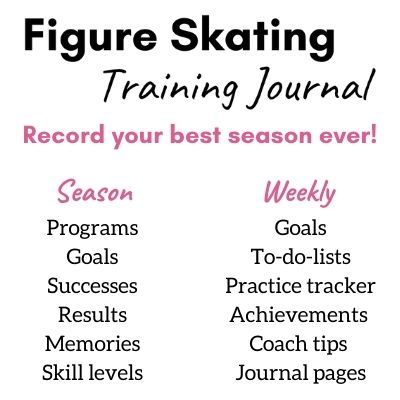
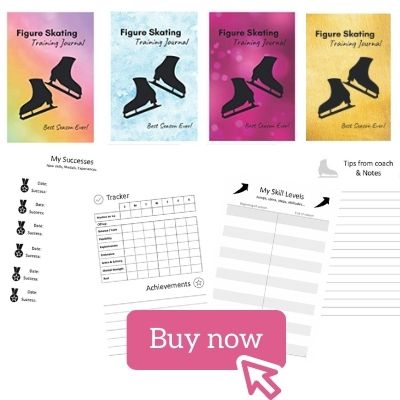
The inside of the journal is full of prompts to dream and record:

Figure skating training notebook interior

It can help you:

  • Clarify your vision and define your goals for the season - for example to pass a figure skating test or successfully land a jump
  • Identify smaller goals to reach each week
  • Track your practice on and off the ice
  • Remember all the critical tips from your coach and go back to re-read them
  • Record your weekly achievements
  • record your season's results and progress

It exists with 4 different covers for you to have a style to fits you:

Get it on Amazon

Get it on Amazon

Get it on Amazon

Get it on Amazon

The cover and interior is neutral - it can be used by all types of figure skaters.


Best figure skating journal for diary

The following journals have been created especially for figure skater to write down their diary.
Not just boring lines, but with silhouettes behind them to keep figure skating in mind!

Figure skating Journal interiors

For all figure skaters

The following journals can work for all figure skaters including ice dancers.
The silhouettes is the same of every page, a pair of figure skates.
Plus the fun saying that Ice skating is good therapy!

Get it on Amazon

Get it on Amazon

Get it on Amazon

Get it on Amazon

For female figure skaters

The following journals are for girl figure skaters. There are 5 silhouettes inside of a female figure skater in various attitudes and skates: 

  • Arabesque
  • Biellmann
  • Spread eagle
  • Ina Bauer
  • Pair of figure skates

Get it on Amazon

Get it on Amazon

Get it on Amazon

Get it on Amazon

Other covers available

For male figure skaters

I have prepared the male silhouettes and working on publishing the journals. Coming soon

For synchronized skaters

The following journals are for synchronized skaters. There are 3 silhouettes inside about synchro skating: 

  • 3 skaters doing Arabesques
  • 3 skaters doing spread eagles
  • 5 figure skates on one line

Get it on Amazon

Get it on Amazon

Get it on Amazon

Get it on Amazon


Figure skating notebooks to personalize

In this section, you can find notebooks that are simply rules inside.
Not specific design on the interiors.
However, you can personalize the cover with the name of the figure skater!

For all figure skaters

Ice skating notebook figure skate red
Personalize and Buy
Ice skating notebook live on edge frozen blue
Personalize and Buy
Figure skating notebook life better skate blue
Personalize and Buy
Figure skating notebook - silver star
Personalize and Buy

See all gender-neutral notebooks to personalize

For female figure skaters

Notebook Figure skating girl purple sparkle
Personalize and Buy
Figure skating notebook star on ice blue
Personalize and Buy
Figure skater notebook axel in life frozen blue
Personalize and Buy
Figure skating notebook - Pink to blue I heart
Personalize and Buy

See all female skater notebooks to personalize

For male figure skaters

Boy figure skater journal - Blue stars
Personalize and Buy
Male figure skater notebook - Blue
Personalize and Buy

See all make skater notebooks (more coming) to personalize

For synchronized figure skaters

Synchronized skating notebook calligraphy Rainbow
Personalize and Buy
Synchronized skating notebook line blue
Personalize and Buy
Synchronized skating notebook line turquoise blue
Personalize and Buy

See all synchronized skating notebooks (more coming) to personalize


Fun notebooks for figure skaters

If you are looking for something more fun just to doodle, below are a few other with different shapes or fun designs:

Love ice skating notebook (square)
Buy it
Ice skating notebook (figure skater woman)
Buy it
Ice skating journal Notebook - Girl red stars
Personalize and Buy
Figure skating notebook - silver Eat Skate Sleep
Buy it

Figure skating coach notebooks to personalize

And finally, coaches need to take notes as well.
These are great gift ideas for your figure skating coach (see more in this article):

Black and white Amazing Figure skating coach Notebook
Personalize and Buy
Figure skating coach notebook - Hard to find
Buy it

Share0
Tweet0
Pin0

You might also be interested in:

Figure skate sharpening (how, when, where…)

30 Most inspirational Figure Skating Quotes

6 life skills / mental benefits from figure skating

Figure skating training journal notebook Pin1
Figure skating training journal notebook Pin1b
Figure skating journal notebook Pin1

21+ Figure Skating Stretches (when, what, how)

Last updated on April 24, 2021

Find out figure skating stretches routines to perform before and after practice, as well as outside the rink, in order to prevent injuries and improve performance. This should be an essential part of your training.

best figure skating stretches Pin2

Table of Contents
Stretching for figure skater - why, when, how
Warm-up: 8 Dynamic Stretches before figure skating practices
7 essential Post-Training figure skating stretches
Off-ice training - 6 flexibility stretching routine for figure skaters

This article contains affiliate links. If you purchase using my link, I get a commission at no extra cost to you (learn more).


Stretching for figure skater - why, when, how

Why should a figure skater stretch?

Stretching is an essential part of every sport. Sadly, it is often the most overlooked. Some skaters, especially younger ones, don’t grasp the importance of warming up before ice skating practice or cooling down after.
A good stretching routine will:

  • reduce muscle imbalances
  • prevent injuries, such as pulled muscles or worse - If your muscles are tight when you’re performing a fast leg movement, for example, your muscles are more likely to snap. 
  • improve performances

Sasha Cohen Split jump, by Rich Moffitt from Boston, USA, CC BY 2.0

Essential to know before stretching

  • Stretches should always be done on warm muscles. If done before training or during the day, start with five to ten minutes of movement that increases your body temperature and causes a light sweat, e.g. jogging or jumping jacks.
  • Don't hold your breath! - It is essential to bring oxygen to the muscles and expulse carbon dioxide for a good stretch. Breathe slowly out as you lean into the stretch.
  • Stretching should be pain-free -  if it starts hurting, move back-off to the position where you don’t feel any more pain and hold it.
  • When holding the position, you may start feeling ease in the muscle. Then, you can push the stretch a little further.  

What muscles should ice skaters stretch?

Figure skaters use almost all the muscles - especially on jumps and spins, but even on simple steps. The whole body contributes to balancing on the little thin blade.
Even though the most important are your lower body stretches, do not overlook the upper body.

  • Muscles of the legs: quadriceps, hamstrings, hip flexors, calves and achilles, groin, hip abductors, and hip adductors
  • Muscles of the upper body: neck, shoulders, upper and lower back, chest, sides of torso 

When should figure skaters stretches?

For figure skaters, stretches are required at 3 moments of your training for different objectives:

  • During warm-up, before any ice skating training sessions - First do a general body warm-up and then do dynamic stretching (short quick movements) to prepare your muscles for the rapid contractions and prepare for some flexibility movements specific to your programs.
  • Right after practice - when your muscles are still warm and you are cooling down, gradually decrease the pace and then perform static stretching (long slow holds) to improve overall flexibility and balance your muscles.
  • During the week, off-ice training - if trying to improve flexibility for better performance, extra sessions of stretches are important. But stretches should always be done on warm muscles.

Exercises for all 3 stretching moments will be shared in the following sections of this article.

Important Note

The following recommendations are based on years of figure skating practice, recommendations by coaches and by physical therapists.
They are typical stretches for figure skaters, without special needs.
Before any physical activity, especially with a specific injury and difficulty, it is always recommended to consult your doctor or physical therapist to adapt to your individual needs.

And don't forget to hydrate!

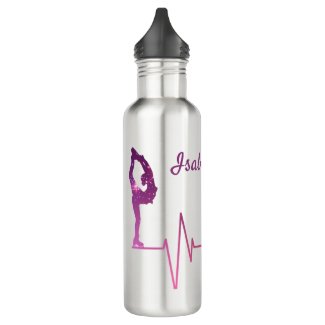
Personalize your water bottle! See all my available designs and colors here.

Ice skating water bottle heartbeat pink to red
Click to personalize
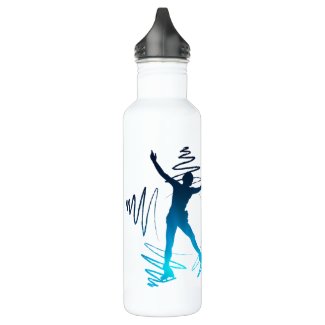
Figure skating water bottle Star skater blue
Click to personalize
Ice skater water bottle Axel in life frozen blue
Click to personalize
Ice skating water bottle figure skates purple
Click to personalize

Warm-up: 8 Dynamic Stretches before figure skating practices

Most warm-up exercises (apart from those to increase your heart rate) are dynamic stretches, which means moving through a range of motions, repeatedly but with control. The motion limits should be challenging but comfortable.
They are not often thought to be stretches, but since they force you to increase your range of motions compared to normal activities, it does stretch your muscles.

They are essential to improve your range of motions and mobility, thus preparing your muscles for what there is to come during figure skating practice.

Plan

  • Before putting on your skates, get your heart rate up by doing some jogging or jumping jack.
  • Then complete the routine of exercises below - keep control of your movements even if dynamic (do not throw yourself in every direction)
  • Repeat movements (slower movements at the beginning, higher intensity at the end)
  • Then put on your skates
  • And redo some arm swings, side lunges and trunk rotations before getting on the ice

Dynamic stretches to warm-up

1. Arm Circles

  • Stand up straight
  • Make circles with your arm, keeping control of your shoulder
  • Alternate circles from front to back and back to front
  • Do both arms

2. Bended swings

  • Spread your legs on the side
  • Sand up straight with your arms at 90° on either side
  • In a controlled manner, go and touch your opposite feet with your fingertips
  • Alternate
Figure skater stretching swings

3. Front lunges

  • Stand up straight
  • Move forward with one leg and bend to 90 degrees (the back leg bends as well)
  • Push to stand back up
  • Alternate legs
Figure skater stretching lunges

4. Side lunges

  • Stand up straight
  • Spread your legs to each side of your hips, stay centered
  • Bend one leg to 90°
  • Move back up to the middle
  • Bend the other leg to 90°
  • Move back up to the middle
Figure skater stretch warm up side lunges

5. Trunk rotations

  • Stand up straight and spread your legs slightly to align with your hips
  • Lift and bend your arms in front of your chest (but keep your shoulders down)
  • Rotate left and right - make sure you control the movement, go as far as possible without triggering pain

6. Ankle rotations

  • Stand up straight and spread your legs slightly to align with your hips
  • Place your foot you its toes
  • Rotate in both directions
  • Alternate feet
Figure skater stretching warm up ankles

7. Leg curls

  • Finish with high intensity leg curls 
  • Alternate legs to bring heels to butt 
  • Alternate legs to lift knee to stomach level

8. Figure skating movements

  • Simulate jumps
  • Simulate landings
Figure Skating gift banner Zazzle 3
ice skating accessory gift banner
Figure skating notebook gift star ice pink
Figure skating leggings gift born to skate
Figure skating blade towel synchro blue arabesque gift
Personalize & Buy

7 essential Post-Training figure skating stretches

Right after practice, when your muscles are still warm, you should complete this stretching routine every single time.
This is essential to balance your muscles and improve flexibility.

Those stretches are called static, because they are held in a challenging but comfortable position for a period of time without bouncing. You slowly take your muscles to the end of their range. 

Because you are at the rink, all the following exercises can be done standing up and still with your skates on (but don't forget to put your blade guards on).

#1 Quadriceps stretches

Your quadriceps (front thighs) are powerful muscles. They are hard at work during figure skating practice. 

  • Stand straight (don't lean forward)
  • Fold one leg behind you, and grab your foot with your hand on that side
  • Keep your other leg straight and keep your knees as close as possible to each other
  • Pull your heel gently toward your backside, feel the stretch in your quad.
  • Hold the stretch for 20 to 30 seconds. Switch legs.
  • Release and repeat 3 or 4 times. 
Figure skating stretches quadriceps

#2 Calf stretches

Figure skating is very demanding on calves. They must be systematically stretched.

  • Stand in front of a wall or in front of the rink railing
  • Stretch one leg behind you and bend the other - keep the distance the same as your hips
  • Pull your heel gently toward the ground while bending the front leg
  • Hold the stretch for 20 to 30 seconds. 
  • Release, switch leg and repeat 3 or 4 times. 
Figure skating stretches calves

#3 Standing hamstring and back leg stretches

There are many positions good for stretching hamstrings.
Below are 3 different positions, choose the one that is the most efficient for you:

  • Stand straight up
  • Position 1 - Place your right leg in front of you. Bend your left knee (a little)
    Position 2 - feet slightly spread apart under the hips
    Position 3 - cross your right foot in front of your left foot, keep knees straight
  • You can place your hands on the most stable thigh (or both)
  • Gently lean forward, keeping your back straight (no hunching!)
  • Hold the stretch for 20 to 30 seconds.
  • Release, switch leg and repeat 3 or 4 times. 
Figure skater stretch hamstring

#4 Groin and inner thigh stretches

Lateral lunges are one of the easiest ways to stretch your adductors and inner thighs after practice while standing up.

  • Take a wide lateral stance with your right foot
  • Turn your right foot pointing 45 degrees outside
  • Bend the right knee and lunge slightly to the right side
  • You feel the thigh muscles of the straight left leg lengthen.  It’s important not to bounce!
  • Hold the stretch for 20 to 30 seconds.
  • Release, switch leg and repeat 3 or 4 times. 
Figure skating stretch groin side lunge

#6 Back and abs stretch

With all the twists, contractions and impacts, your abs are hard at work to keep balance and momentum. This exercise allows you to stretch your side abdominals, obliques and also your arms.

  • Stand straight up
  • Feet slightly spread apart under the hips
  • Cross your fingers, stretch your arms above your head - but make sure to DROP your shoulders away from your ears! 
  •  Lean backward as far as you can without pain.
  • Grab your left wrist with your right hand, and lean to the right as far as you can without pain.
  • Grab your right wrist with your left hand, and lean to the left as far as you can without pain.
  • Hold each stretch for 20 to 30 seconds.
  • Release and repeat 3 or 4 times. 
Figure skater stretch spine arms

#6 & 7 Arms stretch

You use your upper body more than you think when figure skating.  So, it needs to stretch too!

Stretch your triceps

  • Bring one of your elbows across your body, towards your opposite shoulder.
  • Use your other hand to bring your elbow closer to your shoulder.
  • Hold for 20 to 30 seconds
  • Release, switch arms and repeat 3 or 4 times. 

Triceps and Shoulder Stretch

  • Stand straight up, feet slightly spread apart under the hips
  • Bring your right arm overhead and drop your forearm with your palm between your shoulder blades
  • Your left hand grabs your elbow and pulls gently
  • Keep your bicep close to your ear
  • Hold for 20 to 30 seconds
  • Release, switch arms and repeat 3 or 4 times. 
Figure skater stretch arms
Figure Skating gift banner Zazzle 3
ice skating accessory gift banner
Ice skating notebook figure skate rainbow black
Phone case Figure skating girl gold icicle
Ice skate Necklace figure skater red silver
Personalize & Buy

Off-ice training - 6 flexibility stretching routine for figure skaters

The previous exercises are essential whatever your level, before and after practice.
But at a certain point in your figure skating, you may want to get more flexible to improve some of your skills.

In that case you need to work on a flexibility stretching routine outside the rink.

It should be part of a more complete off-ice training routine that includes:

  • Balance
  • Flexibility
  • Explosiveness
  • Endurance
  • Grace and artistry
  • Mental strength
  • Rest

You can find my complete suggestions on my article about off-ice training.

Classic flexibility exercises

Many exercises can be done to improve flexibility using only your body weight

  • Seated toe-touch stretches
  • Cobra stretches
  • Standing toe touch stretches
  • Hip Flexor stretches
  • Butterfly stretches
  • Half splits and splits

You can also practice some of your figure skating attitudes while firmly on the ground.
This should be done at least once a week.

figure skating off ice training flexibility

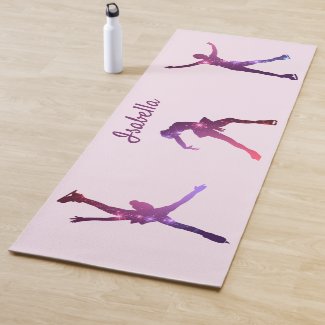
Make it fun with a personalized Yoga Mat! See all my available designs and colors here.

Figure skater yoga mat silhouettes purple stars
Personalize the yoga mat
Ice skating yoga mat skate pairs blue star
Personalize the yoga mat
Ice skating yoga mat skate pattern black white
Personalize the yoga mat

Flexibility training equipment

And if you want to reach even further, check out these off-ice training equipment pieces for flexibility:

Get stretching bands on Amazon

Get a leg stretcher

Get Yoga wheels

Figure Skating Training journal Ad 1a
Figure Skating Training journal Ad 2

Share0
Tweet0
Pin0

You might also be interested in:

50+ Ice Skating Gift ideas (for figure skaters)

25+ Figure skating coach gift ideas (Personalized or not)

Figure skate sharpening (how, when, where…)

best figure skater stretches workout Pin1
best figure skating stretches Pin2
  • « Go to Previous Page
  • Go to page 1
  • Interim pages omitted …
  • Go to page 5
  • Go to page 6
  • Go to page 7
  • Go to page 8
  • Go to page 9
  • Interim pages omitted …
  • Go to page 19
  • Go to Next Page »

Footer

As an Amazon Associate I earn from qualifying purchases. IceSkatingPassion.com is a participant in the Amazon Services LLC Associates Program, an affiliate advertising program designed to provide a means for sites to earn advertising fees by advertising and linking to Amazon.com, Amazon.uk and Amazon.ca

Disclosure / Terms of use / Privacy Policy

Site en Français

Copyright © 2026 IceSkatingPassion.com · Log in

If you continue browsing this site we assume you agree with the use of cookies in this website.