• Skip to main content
  • Skip to secondary menu
  • Skip to footer

Ice Skating Passion

There is not better feeling...

  • BEGINNER
  • FIGURE SKATING / DANCE
  • ICE HOCKEY
  • SPEED SKATING
  • ABOUT
  • STORE

Articles by Claire

Why play ice hockey? 12+ benefits

Last updated on May 6, 2021

Wondering why play hockey, apart for the fun of it?
Discover 12 of the benefits from playing ice hockey: mental, social and physical advantages to improve your own life and your kid's life.
Lessons and benefits that will last for a lifetime for you or your kid.
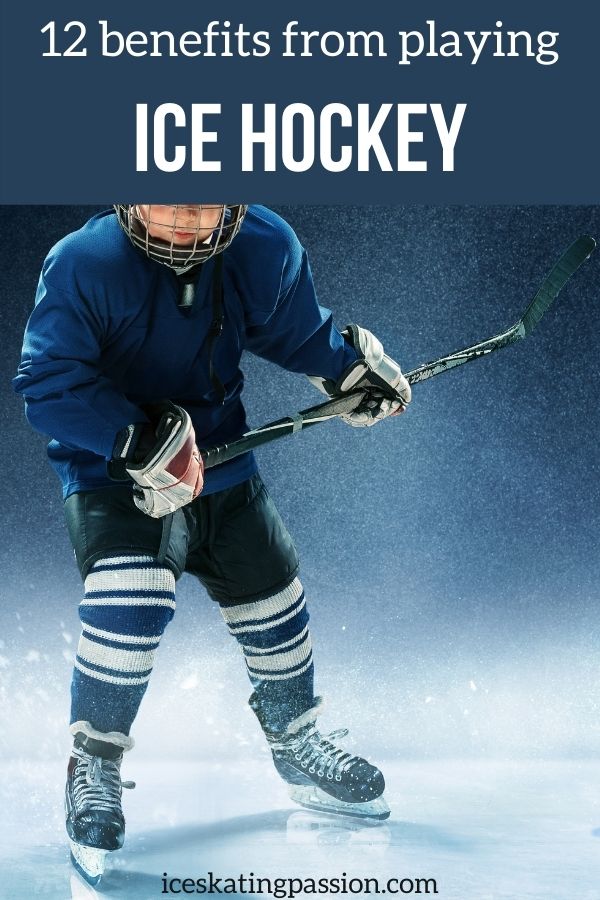
why play ice hockey benefits Pin3

Table Of Contents
Mental and social benefits specific to hockey
The overall ice skating benefits
Physical Benefits of playing hockey - specific
Dangers - are the benefits worth it? Should you or your kid play hockey?

This article may contain affiliate Links (info on the Disclosure page). If you purchase using my link, I get a commission at no extra cost to you.


Mental and social benefits specific to hockey

#1 - Learn nonverbal communication

Despite the mouth guard and the heavy protective equipment, ice hockey is very much a communication sport.
It happens via gestures and eye contacts.
You have to be able to communicate very fast and effectively with your teammate in the middle of a play.

#2 - Learn Teamwork

Ice hockey is a team sport. And with the speed of the game, the team must work as one.
Every year, the sport proves to be a great way for young kids to learn about bonding and working towards a common goal.
Skin color, looks and personality, or socioeconomic status are of no importance. Instead, every team member must be committed, talented, dedicated, and adhere to work ethics.
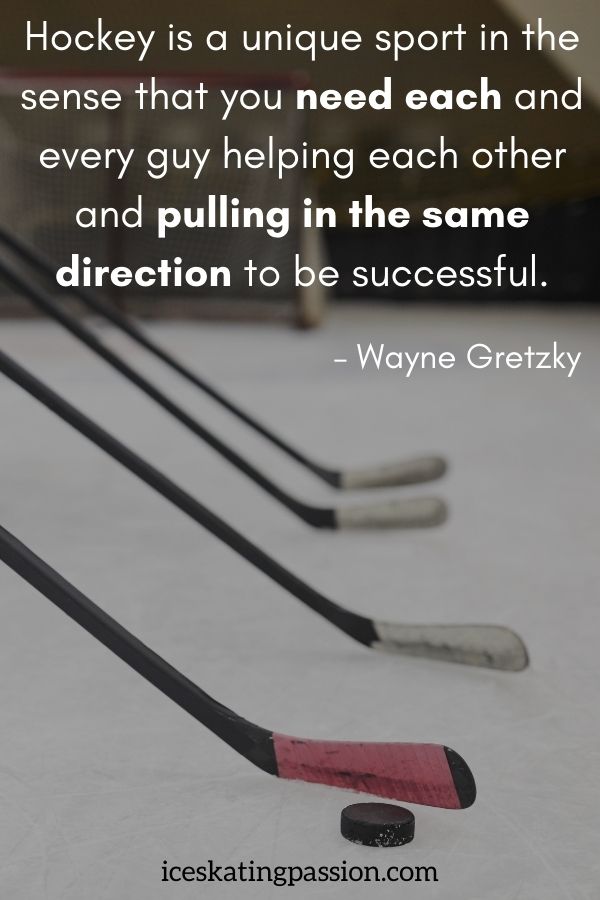
Inspiration ice hockey quote team work - Wayne Gretzky - pulling in the same direction
Hockey Playbook

#3 - Learn Respect

The game teaches both, children and youth, wonderful life skills. One of them is to develop a sporting spirit. Your team may have won or lost. Regardless, both teams must line up at the center after a match. The idea is to offer congratulations to one another. In other words, the losing team appreciates the efforts of the winning team. Similarly, shaking of hands is imperative too. This shows that no one harbors hard feelings.

#4 - Learn to overcome difficulties

Ice hockey is a lively game, full of ups and downs. For example, each team has to score as many goals as possible. Team members may find themselves knocked down. Penalty shots are a norm too. Whatever is the case, you always get a chance to make up for earlier mistakes, in the next game. Thus, through teamwork, you learn to tackle challenges. You also learn to handle disappointments and successes with maturity.
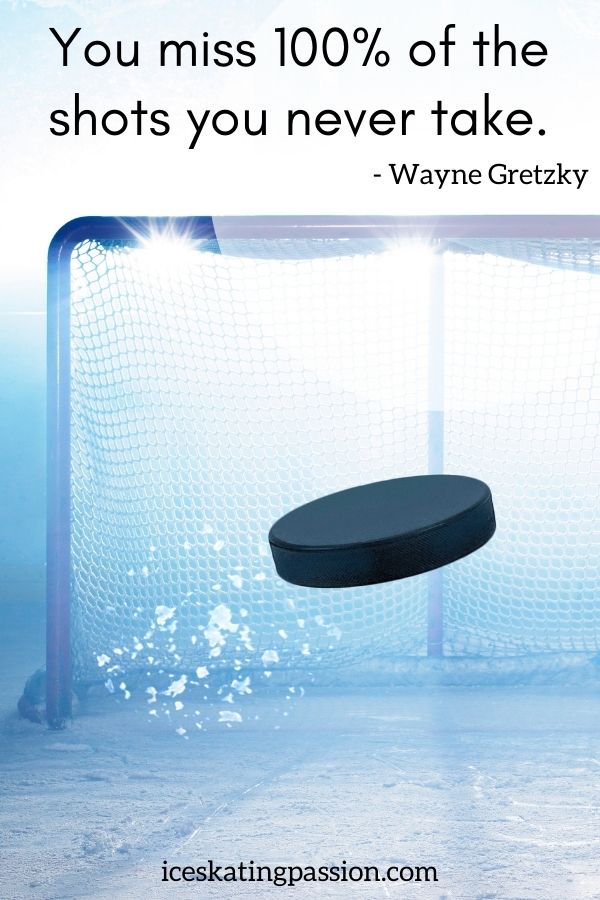
Inspiration ice hockey quote - Wayne Gretzky - miss shots never take

#5 - Value preparation / long term thinking

This is a great life lesson from all sports.
It does not matter if you fail to achieve instant gratification. The wait for long-term gains is well worth it!
Practice games prepare your body, mind and spirit. Gradually, you achieve personal success, as well as success in life.
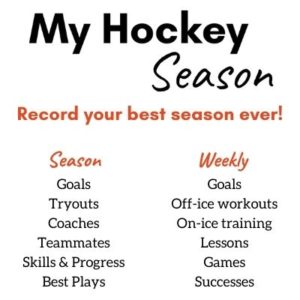
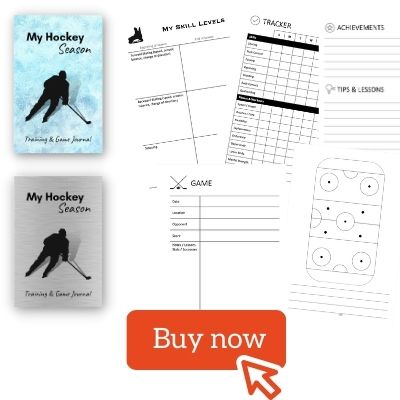
Season Hockey Training Log notebook
Season Hockey Training journal notebook

#6 - Develop Mental agility / Concentration

Ice hockey is a fast game. The momentum can change in seconds. This should help any player in future. You will be able to engage in quick decision-making whenever the need arises and to think on your feet too.

Similarly, you improve your concentration. Even while playing/learning, you comprehend the cause-effect events that take place on the field. In turn, you develop relevant strategies for handling any situation successfully. This should help you in your personal/professional life too.

Mental imagery is another useful talent. You are able to visualize a clear picture in your mind. This means you create a mental action plan for achieving a particular goal.
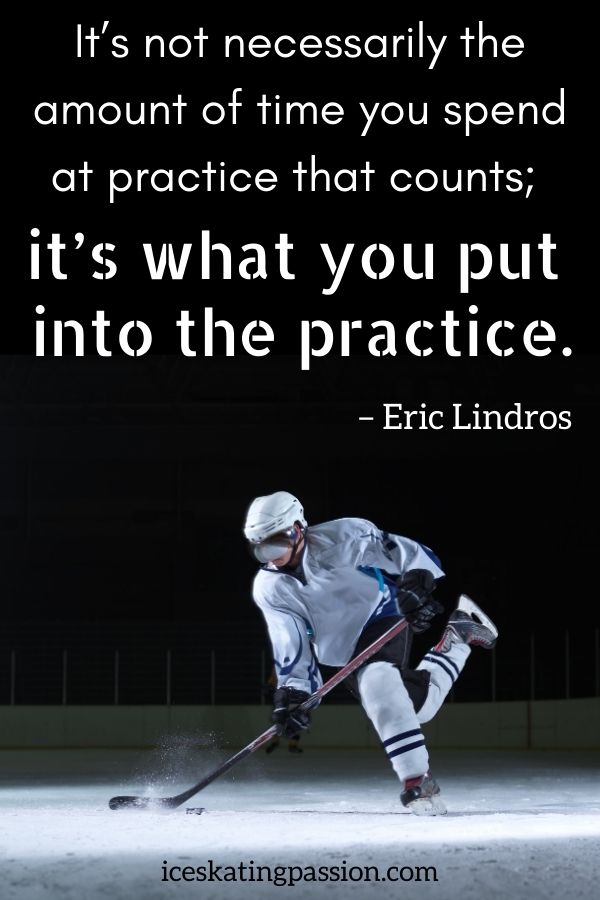
Inspiration ice hockey quote about hard work - Eric Lindros - what you put into the practice

Find more hockey quotes in this article


The overall ice skating benefits

Hockey is an ice skating sport. Therefore, all the physical benefits of ice skating are gained as well when playing hockey, whatever the position in the team. You can learn more in this article, but here is a summary: 

#7 - Hockey improves Motor Coordination

Ice skating is all about balance. Balance requires your whole body and your brain. Everything has to move as one:  your feet and legs of course, but also the position of your arms, torso, neck, head and where you are looking. It engages every part of your body to control the movement.
This activity develops pathways in your brain, creating connections. And those remain open after practice.

#8 - Hockey increases Joints Flexibility

Your joints will become more flexible, thanks to playing hockey on the ice. The re-awakening of several important muscles will help you move more. Even the impact on the muscles and joints is low. Therefore, ice hockey can prove more beneficial than running and cycling.

The game ensures continual movement. However, there is no excessive stress on the joints or muscles. Instead, the connective tissues around the joints become strong. So do the ligaments. Regular flow of synovial fluid helps in keeping the joints well lubricated. Just make sure that you do not jump around.
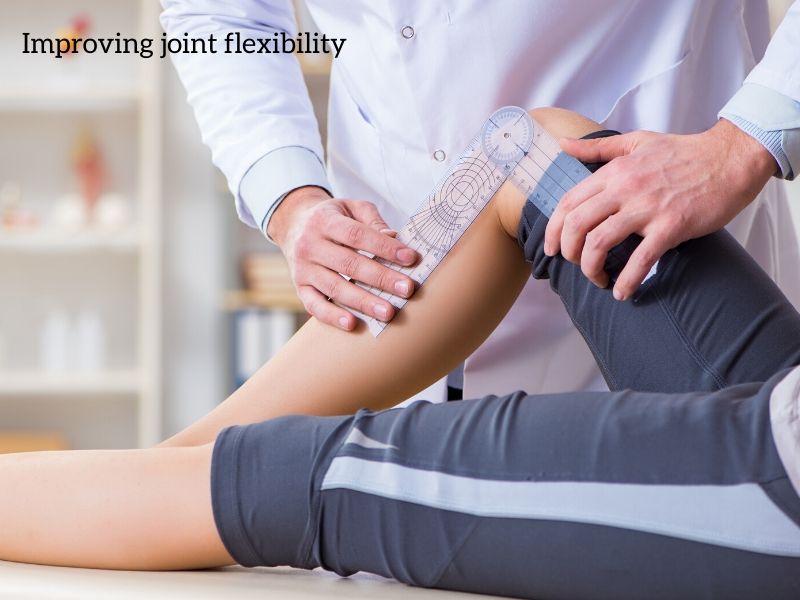
health benefits ice skating joints flexibility

#9 - Hockey builds muscles & improves posture

It does not matter if you are moving leisurely or speedily. The muscles in your abdomen, hips, thighs (quadriceps), knees (hamstrings), legs, calves and buttocks (gluteus maximus) gain a great workout from ice skating. They become strong and well-toned. The muscles increase in mass too.

Skating is all about balancing on a slim, metal blade. Therefore, the muscles of your abdomen and legs contract and relax continuously. These core muscles gain in strength. Furthermore, the constant balancing results in a good posture.

#10 - Hockey increases Cardio Health and Endurance

As you skate, you use your arms to balance better. There is also consistency in stroking the puck. Hence, your heart begins to pump more vigorously. The heart rate increases. The blood circulation improves. It follows, therefore, that your cardiovascular health improves.

Now, you are moving around the rink continuously. Your muscles are contracting constantly. Your heart rate remains high. Therefore, you are building up endurance. 

When practicing ice skating, ice hockey skating is akin to light jogging or moving up a hill.

Off ice hockey workout routines should complete the on-ice training. Learn more on off-ice training.


ice hockey gift banner
Figure Skating gift banner Zazzle 3
Ice hockey skate towel goalie blue
Ice Hockey keychain favorite season black white
Born to play hockey t-shirt frozen blue
BUY +  PERSONALIZE

Physical Benefits of playing hockey - specific

#11 - Ice hockey develops hand-eye coordination

Because you have to master the puck as it is sliding on the ice, the game is great for enhancing hand-eye coordination. For instance, your hand-eye reflexes work faster.
Practice will increase your agility and coordination during play to handle your skates and hockey stick splendidly. Thus, the puck goes soaring into the goal post all that much faster!

All these abilities come into play in your day-to-day life too. You are comfortable with parking a car, playing outdoor games, reacting to sudden dangers etc.
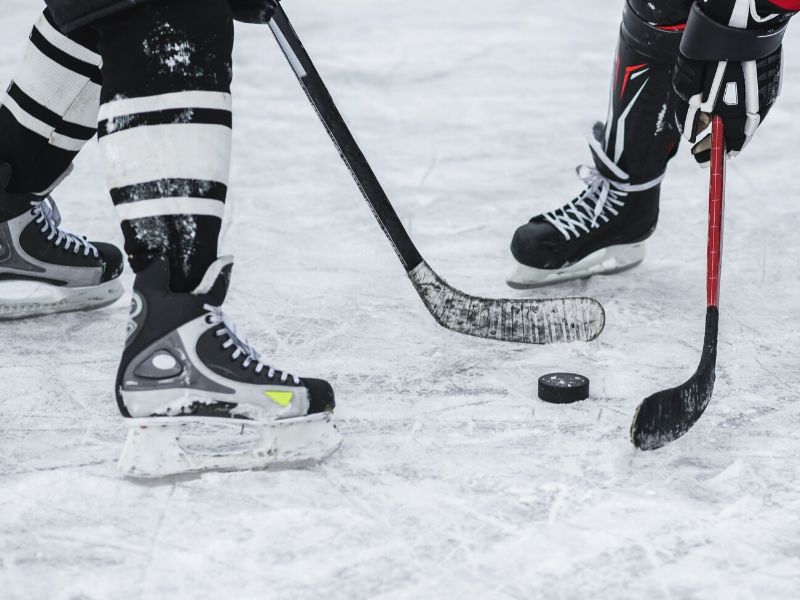
Ice hockey puck sticks canva

#12 - Ice hockey improves Reflexes and Reaction time

As I have written many times, ice hockey is a fast game. Therefore, it improves the spontaneous reactions of players.
Any kind of stimulus gets an immediate response. In other words, your reaction time improves. In turn, you will be able to make correct decisions during play.

For example, a goalie has to quickly notice the puck being shot and move accordingly to stop it.  
And players have to react when the puck is thrown to catch it while avoiding body checks.

#13 - Ice hockey is fantastic for visual perception

Visual perception is the brain's ability to make sense of what the eyes see. It is different from the acuity which is how clearly you see.
The quantity of information to manage during a game of ice hockey is huge: the position of the players, the position of the puck, the speed of the puck, the state of the ice... Therefore, by playing hockey, your brain will learn to:

  • Process information faster
  • Discriminate information faster (keeping only relevant information to take a decision)
  • Pay more attention to the essential information
  • Understand spatial relationships 
  • Assimilate form constancy to understand where the puck is going to be

Those are some of the building blocks of visual perception which are essential in the development of any child.


Dangers - are the benefits worth it? Should you or your kid play hockey?

All those benefits are great, but, as a hockey mom, you might still be worried for your kid.
Should he/she play hockey? Are the dangers too important?
Let's have a look.

First know that injuries have decreased significantly. Rules have changed and protective equipment has improved.
Today most injuries are minor.

Why is it dangerous?

Well, the skaters are skating fast, the puck is gliding fast, the sticks are moving in all directions and the skates have blades... let's face it, there is potential for injury.
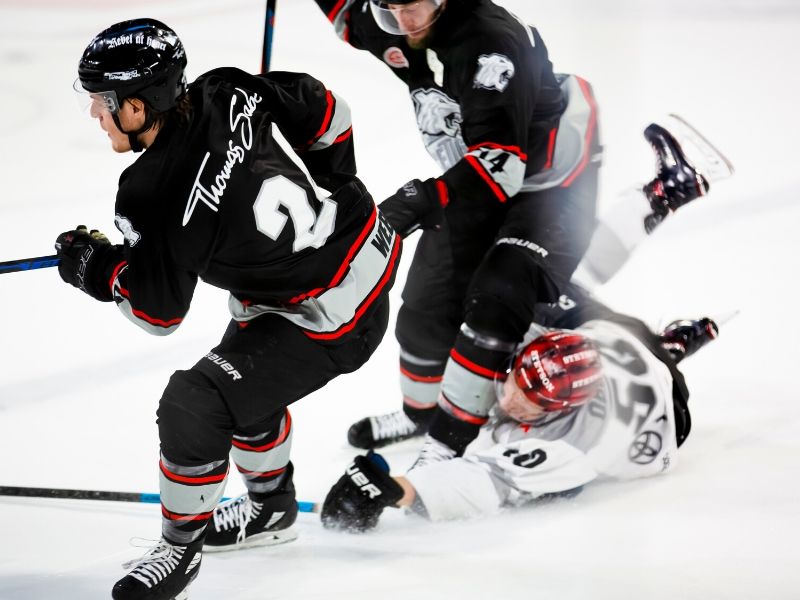
Ice hockey protection equipment need

The dangers of ice hockey

The main types of injury from hockey area:

  • cuts
  • bruises
  • muscle strains
  • ligament tears
  • teeth damages - make sure to wear a mouthguard (my tips to choose the best one here)

Which can happen in any sport and just playing at home.

The most serious injuries such as:

  • concussion
  • broken bones
  • spinal 

do occur but not frequently and almost only with grown-ups playing dirty.

Mitigation of the dangers

  • Make sure you or your kid play in a league with strict rules
  • Purchase quality protective gear. Like a motorbike helmet, a hockey helmet should be changed after a very strong blow. Cracks in the internal structure will make it less effective.
  • Hydrate frequently - it is important to keep muscles and ligaments flexible
  • Warm-up and stretch. Sadly, it is often overlooked, especially in those kinds of sport. But warming up before and stretching after practice should be non-negotiable to keep muscles and ligaments in good conditions.
  • Train off season to keep your body in great shape and avoid injuries typical at the beginning of the season when muscles are not prepared
  • Take good care of your skates and equipment

Ice hockey protective gear to wear

Get it on Amazon

Get them on Amazon

Get it on Amazon

  • Helmet
  • Shoulder pads, knee pads, elbow pads, shin pads, 
  • Gloves
  • Hockey pants with padding and shell
  • Athletic supporter and cup for boys
  • Neck protector
  • Mouth Guard 
  • Good skates with proper fit
ice hockey gift banner
Figure Skating gift banner Zazzle 3
Ice hockey player - sticker (black)
Ice Hockey t-shirt Favorite season fan blue
Ice hockey puck goalie silhouette black white
BUY +  PERSONALIZE

Share0
Tweet0
Pin0

You might also be interested in:
How to clean hockey equipment (at home)

15 ice hockey themed wedding ideas

14 best Hockey Shoulder Pads (in 2022)

ice hockey health benefits Pin2
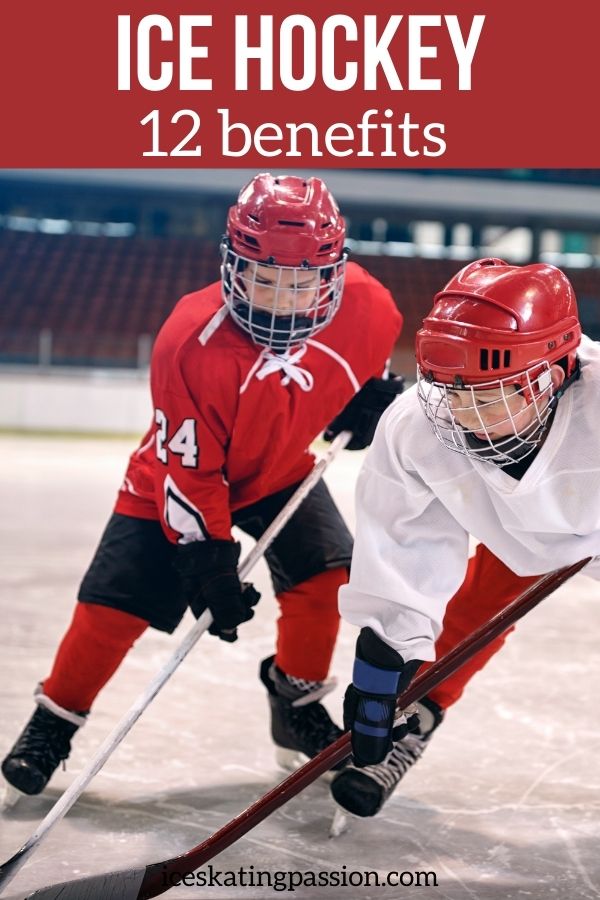
ice hockey benefits Pin1

What is Ice Dance? An introduction

Last updated on March 6, 2022

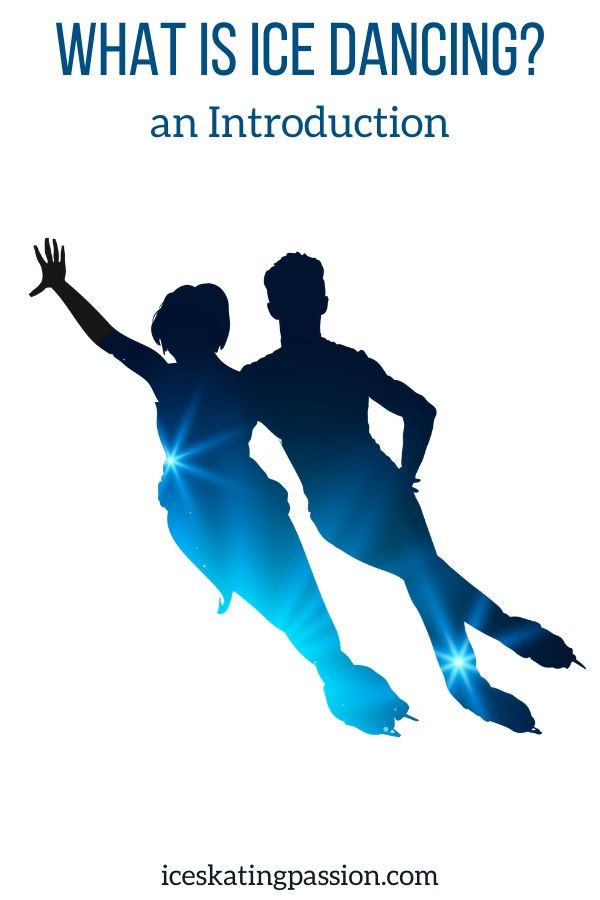
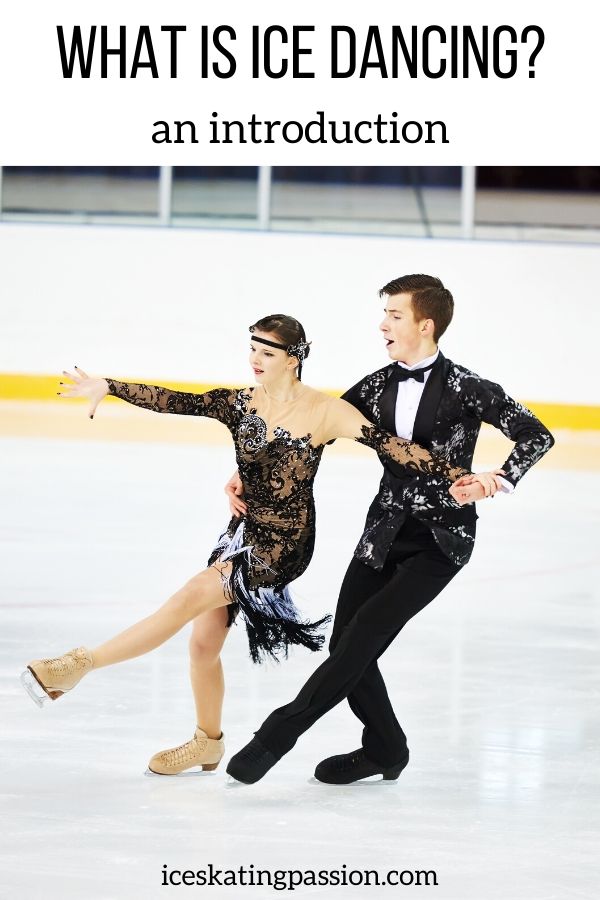
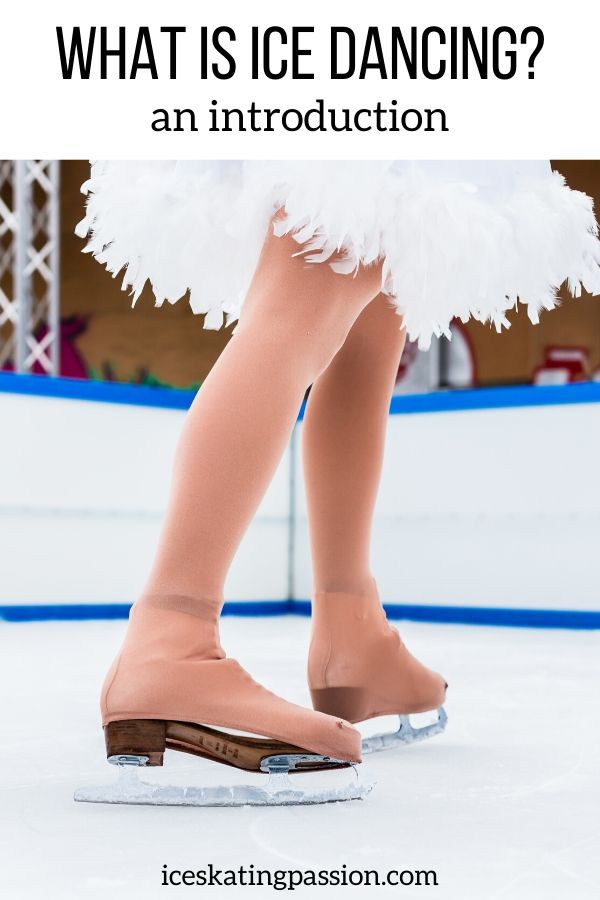
What is ice dance? Sometimes figure skating events can become confusing. The article below will give you a brief introduction to ice dancing for you to understand better: how it is a different discipline, its history, rules and scoring...

What is ice dancing Pin3

Table of Contents
What is ice dance - Introduction
History of ice dancing
Basic rules
Scoring (at international level)
Equipment
Famous ice dancers

This article contains affiliate links. If you purchase using my link, I get a commission at no extra cost to you (learn more).


What is ice dance - Introduction

Ballroom dancing on ice

Ice dance is sometimes called Ice Dancing.
It is one of the disciplines of figure skating.

  • At its origin, it is simply a transposition of ballroom dancing on the ice.
  • Contrary to the other figure skating disciplines, ice dancers focus on the technical footwork on the ice and on the dancing aspect interpreting the musing.
  • At national level it can be skates alone or as a pair. At international level, competitions are only for pairs.
  • Contrary to pair figure skaters, there are hardly any jumps and lifts have different rules

You can learn more on the differences between figure skating and ice dance in this article.

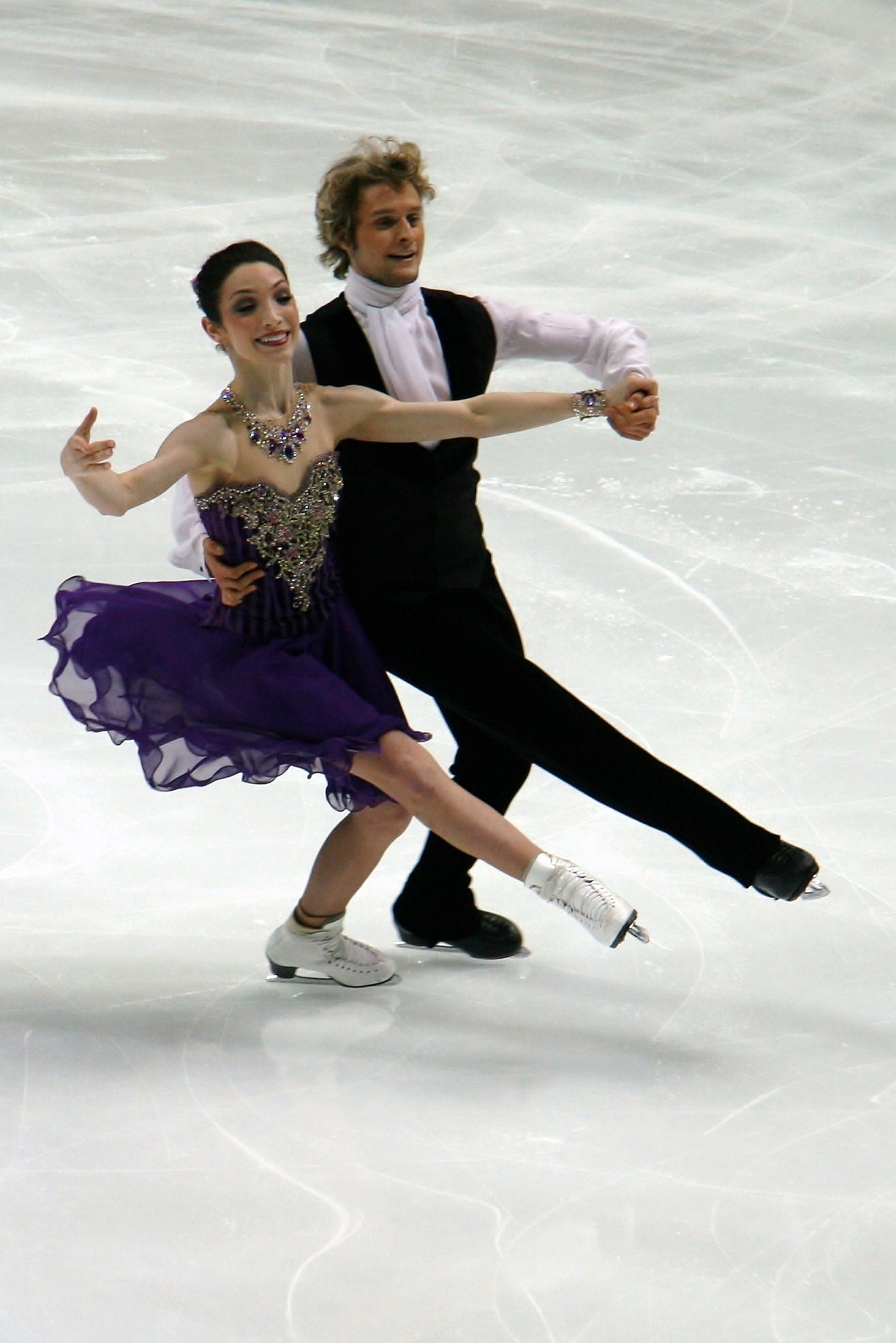
ice dancers Meryl Davis and Charlie White

Meryl Davis and Charlie White, Luu, CC0

Events

Ice dance has 2 main events at international competitions

  • The Rhythm Dance -
    The rhythms and themes of the dance are determined by the ISU prior to the start of each new season (for example: Folk for 2020/2021). They also identify pattern dance move that has to be incorporated into the dance so as to compare technical skills between dancers.
  • The Free Dance –
    According to the "2019 U.S. Figure Skating Rulebook" defines it as "the skating by the couple of a creative dance program blending dance steps and movements expressing the character/rhythm(s) of the dance music chosen by the couple".

At lower levels there are also compulsory dances, where the skaters perform the exact same routine several times in a row to compare technical skills.

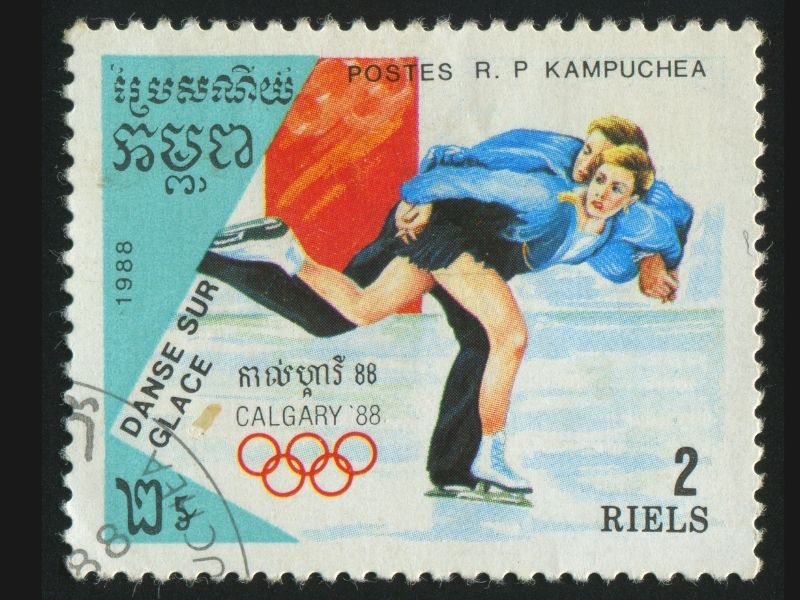
Ice dance history stamp Yayimage

Papadakis / Cizeron - Bff, CC BY-SA 4.0


History of ice dancing

Origins

Ice dancing or figure skating originated in the mid-1800s. Back then, skaters treated the flat ice as an open-air ballroom. Conservative moves, with both feet firmly planted on the floor, were the norm.

Social pair skating was popular during the 1800s, where Ice skaters borrowed from marches, waltzes, and other social dances.

Jackson Haines, an American ballet dancer, took figure skating to another level. His style of ice skating was not appreciated in the USA. He moved to Europe and trained the Viennese to dance on the ice individually or in pairs. European and American waltzes proved to be favorites. 

Changes occurred over the years. Simple steps became more complicated. Delicate ballet steps also made an appearance. The genres of music also grew diverse at this time, and all this helped in bringing greater diversity into ice dancing.

Ice dance history stamp Yayimage

Competition

Ice dance began with the elite classes. Later on, all classes joined in. In turn, this led to it becoming a competitive sport.
Russia hosted the first event in 1896. Only males were participating`. In 1906, organizers hosted a similar competition for women in Switzerland.

Ice dancing remained the hottest global trend during the early 1900s. People still viewed this discipline as a leisure-time activity. However, local clubs in the U.S. and the UK organized informal contests, during the 1920s. Right up to the 1930s, three forms of ice dance predominated with dances like the Ten step, the fouteen-step and the Killian.

By the mid-1930s, people began to think of professional competitions. The ISU decided to formulate specific standards, rules and tests for global events.
This led to the initiation of international competitions in the 1950s. The first World Championships event was in 1952. The European Championships was in 1954.

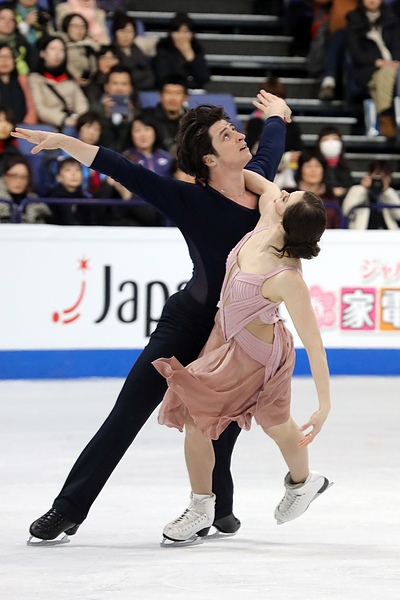
Tessa Virtue and Scott Moir 2017 World

Tessa Virtue and Scott Moir - 2017 World - David W. Carmichael, CC BY 3.0

Olympics

While figure skating appeared at the Summer Olympics in 1908, ice dance remained a leisure sport.

Prior to 1976, the Olympics Committee permitted ice-dancing displays as exhibition performances.
However, the Winter Olympics in 1976, at Innsbruck, changed all that. Ice dance became an official Olympic sport. Austria was the host. The Soviet Union’s pair of Aleksandr Gorshkov and Lyudmila Pakhomoa won the gold medal.

The 2010 Winter Olympics brought more changes. The compulsory dances disappeared.
Ice dance performers began performing only 2 events. They combined rhythm (original dance form) and free dance forms. Combined spins were introduced. This led to routines being more exciting watch for TV.

Learn more about figure skating at the Olympics.

Figure Skating gift banner Zazzle 3
ice skating accessory gift banner
Figure skating notebook gift star ice pink
Figure skating leggings gift born to skate
Figure skating blade towel synchro blue arabesque gift
Personalize & Buy

Basic rules

The rink

Ice dance is performed on an Olympic-sized figure skating rink.
The dimensions are 60 metres (196 feet 10 inches) by 30 metres (98 feet 5 inches).

The elements

The rules of Ice dance require the pairs perform specific elements to create a well-balanced skating program.
They include:

  • Dance lift: "a movement in which one of the partners is elevated with active and/or passive assistance of the other partner to any permitted height, sustained there and set down on the ice". Difficulty is increased by rotating or adding changes in position during the lift. Dance lifts are often dramatic and exciting.
  • Dance spin: "a spin skated by the Couple together in any hold". It can be a single position spin or combine different positions (with a smooth changing)
  • Step sequence: "a series of prescribed or un-prescribed steps, turns and movements".
  • Twizzle: "a traveling turn on one foot with one or more rotations which is quickly rotated with a continuous (uninterrupted) action".
  • Choreographic elements: "a listed or unlisted movement or series of movement(s) as specified"

Skaters must execute the prescribed elements at least once.

Meryl Davis and Charlie White ice dance lift

Meryl Davis and Charlie White, Luu, CC0


Scoring (at international level)

The scoring method has evolved significantly in the last 10 years. It is now very technical and difficult to explain.
Nowadays, each performance—a Technical score and a Program components score.

Technical score

The technical score is based on the difficulty and execution of the technical elements listed above

  • Each element of the program is assigned a base value, which gives skaters credit for every element they perform.
    Some elements, such as spins and step sequences, have levels of difficulty on which the base values are established
  • Judges grade the quality of each element using a grade of execution (GOE) score within a range of -5 to +5, which is added to or deducted from the base value. GOEs are proportional to the base value of each element
  • The highest and lowest scores for each element are thrown out, and the remaining scores are averaged to determine the final GOE for each element. The GOE is then added to or subtracted from the base value for each element, and the sum of the scores for all elements forms the technical score.

Grand Prix final 2019, Luu, CC BY-SA 4.0

Program components Score

This score is based on the artistry, the interpretation of the music and the dancing display.
The judges give points from 0.25 to 10 (in increments of 0.25) for five components of the program:

  • Skating Skills - 
    It considers the overall quality of the skating quality: the edge control, the fluidity, the flow over the ice surface, the effortless speed, the cleanliness of the foot techniques.
  • Transitions -
    The difficulty and variety of transition in footwork, positions and pair hold.
  • Performance -
    How the skater gets involved in the choreography, the harmony, the style and personnality
  • Composition / choreography -
    How the movements of the routine are arranged to create a fluid choreography that is proportionate, uses the spaces, creates pattern, is structured around the music...
  • Interpretation of Music -
    "the personal and creative translation of music to movement on ice" - e.g. expression of the music style, interpretation of nuances in the music

As with Grade of Execution, the highest and lowest scores for each component are thrown out, and the remaining scores are averaged. The final program components scores are then multiplied by a set factor to ensure the technical score and program components score are balanced.

Deductions

Deductions are applied in case of:

  • Fall
  • Illegal element
  • Interruption in performance
  • Non respect of timing
  • And many many other rules (such as length of lift, music, tempo costumes…)

The scores are then added.

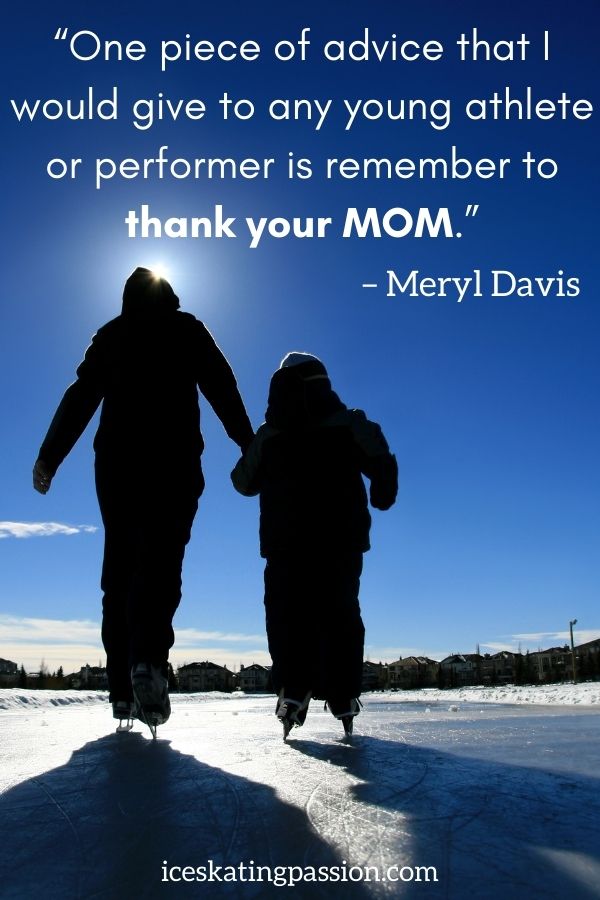
Ice dance quote meryl davis thank your mom
Figure Skating gift banner Zazzle 3
ice skating accessory gift banner
Ice skating t-shirt figure skates purple crystals
Ice skating luggage figure skates black white
Figure skater yoga mat silhouettes purple stars
Personalize & Buy

Equipment

Skates

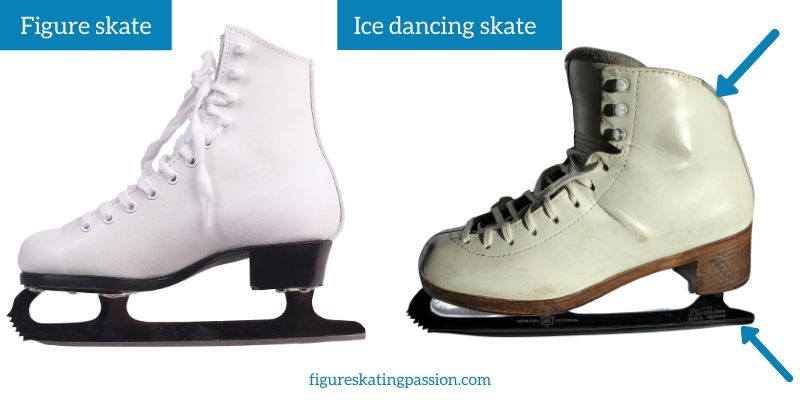
Like for figure skating the overall skate is a boot and a blade with toepicks.
However when starting competition, differences appear in the skates :

  • the blade for ice dance is shorter at the end. It is not much longer than the boot as opposed to figure skates.
  • At high level, ice dancers often have special boots that are cut at the back to allow for better lines when pointing toes.

However, the rest of the equipment remain the same (skate guards, soakers, bags...)

figure skates vs ice dancing skates

Costumes

Finally, as a general rule, ice dancing dresses are often longer than figure skating.
Here again it is logical since figure skaters need aerodynamic outfits to jump and spin. If the dress is too long, it will limit their movements.

If you are looking for a gift for an ice dancer, most items in my figure skating gift guide are perfect.


Famous ice dancers

At international level, ice dance can only be performed as a couple.
Europe long dominated the discipline. But Canadians And Americans have been winning more frequently since 2010.

Famous Ice dancing couples include:

  • Jayne Torvill and Christopher Dean (United Kingdom) - Olympic gold in 1984 and World champions.
  • Oksana Grishuk and Evgeni Platov (Russia) - 4 times World champions (1994 to 1997) - Olympic Gold in 1994 and 1998.
  • Marina Anissina and Gwendal Peizerat (France) - 2002 Olympic Champions and 2000 World champions.
  • Tatiana Navka and Roman Kostomarov (Russia) - 2006 Olympic gold and 2 times World champions.
  • Tessa Virtue and Scott Moir (Canada) - 2010 Olympic Champions, 3 times World champions.
  • Meryl Davis and Charlie White (USA) - 2014 Olympic Gold, 2 times World champions.
  • Gabriella Papadakis and Guillaume Cizeron - Many times world Champions, Silver Olympic medallists in 2018.
Figure Skating Training journal Ad 1a
Figure Skating Training journal Ad 2

Share0
Tweet0
Pin0

You might also be interested in:

The 5 Figure Skating Olympic Events

Figure Skating Competition Checklist (to-do + packing)

Best synthetic ice for figure skating (+ is it a good idea?)

What is ice dancing introduction Pin2
What is ice dancing introduction Pin

25 figure skating facts (interesting and fun)

Last updated on March 6, 2022

Want to know more fun facts about figure skating, your passion? I have gathered 25 interesting ice skating facts to learn more about the history of the sport, the ice rink, the first jumps and more! Have fun discovering this trivia.

interesting figure skating facts Pin3

Table of Contents
FUN facts about figure skating
NUMBERS & RECORDS - Figure skating facts
THE FIRST - Interesting facts about figure skating
HISTORY - Ice skating facts

This article contains affiliate links. If you purchase using my link, I get a commission at no extra cost to you (learn more).


FUN facts about figure skating

#1 - The rink is resurfaced with hot water

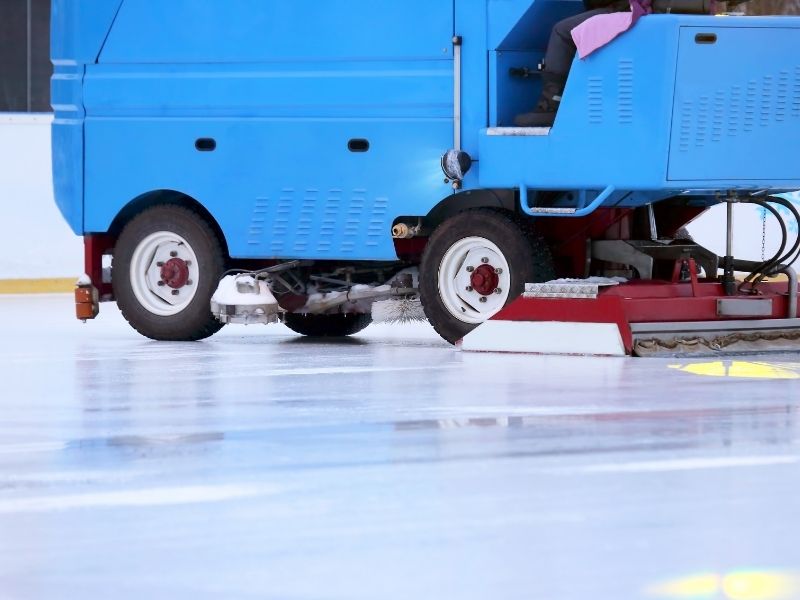
That will blow most people's minds but the Zambonis (ice resurfacer), after scraping the ice, puts a thin layer of water that is heated to 140 to 145 °F (60 to 63°C). Actually, the hotter the water, the more even surface will get!
You would think you need cold water to make ice; But hot water contains less oxygen which makes it easier for molecules to bind and freeze.

ice resurfacing Zamboni ice rink fact canva

#2 - Why it is called figure skating...

OK. Ice skating makes sense. Ice dancing and synchronized skating do too.
However figure skating does not make sense at first. So, where does the name come from?

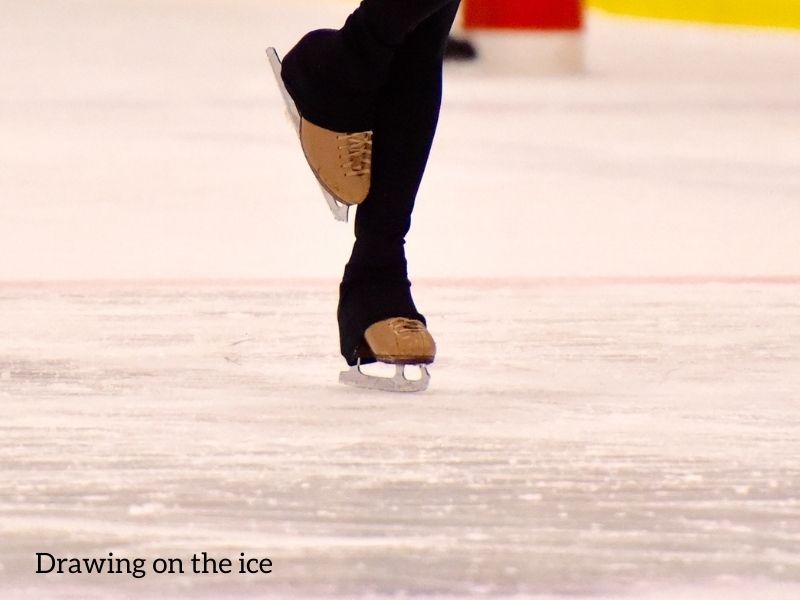
The term "figure" refers to the "compulsory figures" or designs skaters had to make on the ice. It all started with the basic figure eight they had to be able to draw on one foot with the blade.
The figures used to be the most important part of figure skating. But as television started broadcasting the sport, it had to change to make it more appealing. They disappeared from competitions in the early 1990s.

figure skating name fact canva

#3 - There is a trick to keep shirts tucked in

Have you ever watched a man figure skate with a shirt and wonder how in the World we are not seeing skin with all the arm movements he is making?
Well, they are wearing special underwear that is attached to the shirt so that it does not come out of the pants when they raise their arms.

#4 - A Zamboni is a brand not a machine

For a long time, everyone has been talking about the Zamboni at the rink. However, the machine is an ice resurfacer. Frank J. Zamboni invented the first ice resurfacer in 1947.

#5 - The first skating moves were made on animal bones

Archaeologists have found that skating on frozen lakes and rivers was used to improve transportation in Finland thousands of years ago (to avoid walking all around a lake for example). At the time, there were strapping animal bones to be able to glide. They made holes at each end of the bones and used twine to go through them and attach to their feet. Archaeologists think they were using wooden poles to help with propulsion.
The metal blades appeared only during the 13th century.

Ice skating bones

The Swedish History Museum, Stockholm from Sweden - CC BY 2.0

#6 - "Kiss and cry area" is an official term

During the televised competitions, at the end of a program you always see the skaters sit with their coaches in a specific area. The camera will stay on them until they hear their marks. This area is officially called "Kiss and cry" (It is so identified in the ISU constitution and regulations of 2018).
The term was coined by Jane Erkko. She was part of the organizing committee for the 1983 World Figure Skating Championships in Helsinki. She commented with others that skaters would kiss and cry in that area and the name was a joke at first. But it was introduced in the regulations.

#7 - Skaters can be afraid of feathers

There is a rule in figure skating that if a piece of your costume falls on the ice, you get a deduction.
Therefore there are materials that most figure skaters don't like using - a few points can mean a gold medal or not. 
Feathers are the worst. You may see other materials imitating the shapes of feathers. But actual feathers are not used because they tend to lose pieces.

Figure Skating gift banner Zazzle 3
ice skating accessory gift banner
Figure Skate blade Towel Axel in life pink glam
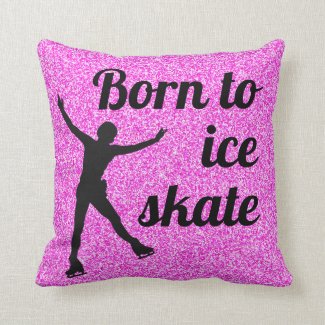
Ice skating pillow - Pink Born to ice skate
Ice skating notebook live on edge blue silver
Personalize & Buy

NUMBERS & RECORDS - Figure skating facts

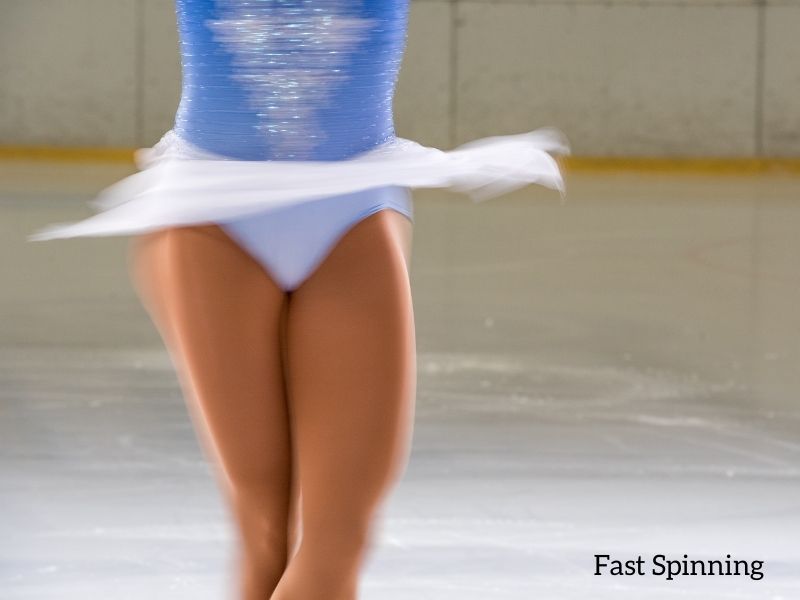
#8 - 342 RPM

Have you seen the top figure skaters spin on the ice and how their faces are smashed by the speed.
Have you ever wondered how fast they spin? The answer is that they can reach 6 revolutions per second which is over 300 revolutions per minute! 

The current World record dates back to 2015. Olivia Oliver spinned at 342RMP.

figure skating speed fact canva

#9 - 84

84 is the number of participants for the largest ice skating pinwheel as recorded by the Guinness World records.
It happened in 2012 in the United Kingdom with the Trafford Youth synchronized ice skating teams.

#10 - 14 and 15

In 1997, Tara Lipinski became the youngest woman to win the World championships. And the next year, she became the youngest Olympic figure skating champion at 15.

#11 - 24 to 26°F

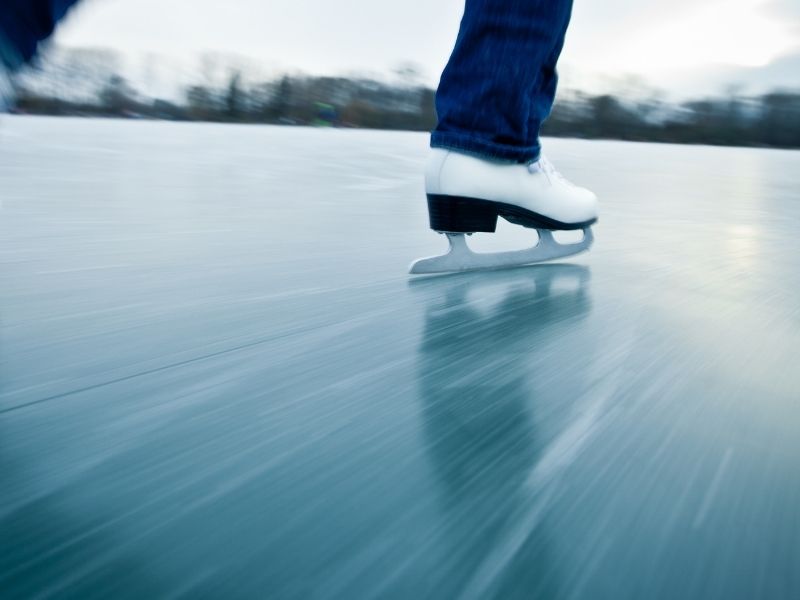
Surprising fact about the ice skating rink... No, a colder rink does not mean a better ice. When under 20°F (-6°C), the ice actually becomes brittle. Not good when you want to skate on it.
The sweet spot is considered to the be between 24°F and 26°F (-4°C and -3°C).
But you can also skate on synthetic ice at any temperature!

ice skating rink fact canva

#12 - 1000lbs pressure

Depending on paper readings, measurements show that a skater landing a triple or quadruple jump will have a landing force of 5 to 14 times the body weight on impact.

Therefore, a male skater weighing 150 pounds can land with a pressure of 1000 pounds!

Figure Skating Training journal Ad 1a
Figure Skating Training journal Ad 2

THE FIRST - Interesting facts about figure skating

#13 - Axel Paulsen

In 1882, Axel Paulsen was the first skater to perform a jump starting forward. It is now known as the axel. And he did it wearing speed skates!

#13 - Triple Axel

The first triple axel landed in competition was performed in 1978 by Vern Taylor at the World Championships.
For women, the first was landed in 1988 by Midori Ito during the Eastern Japanese championships.

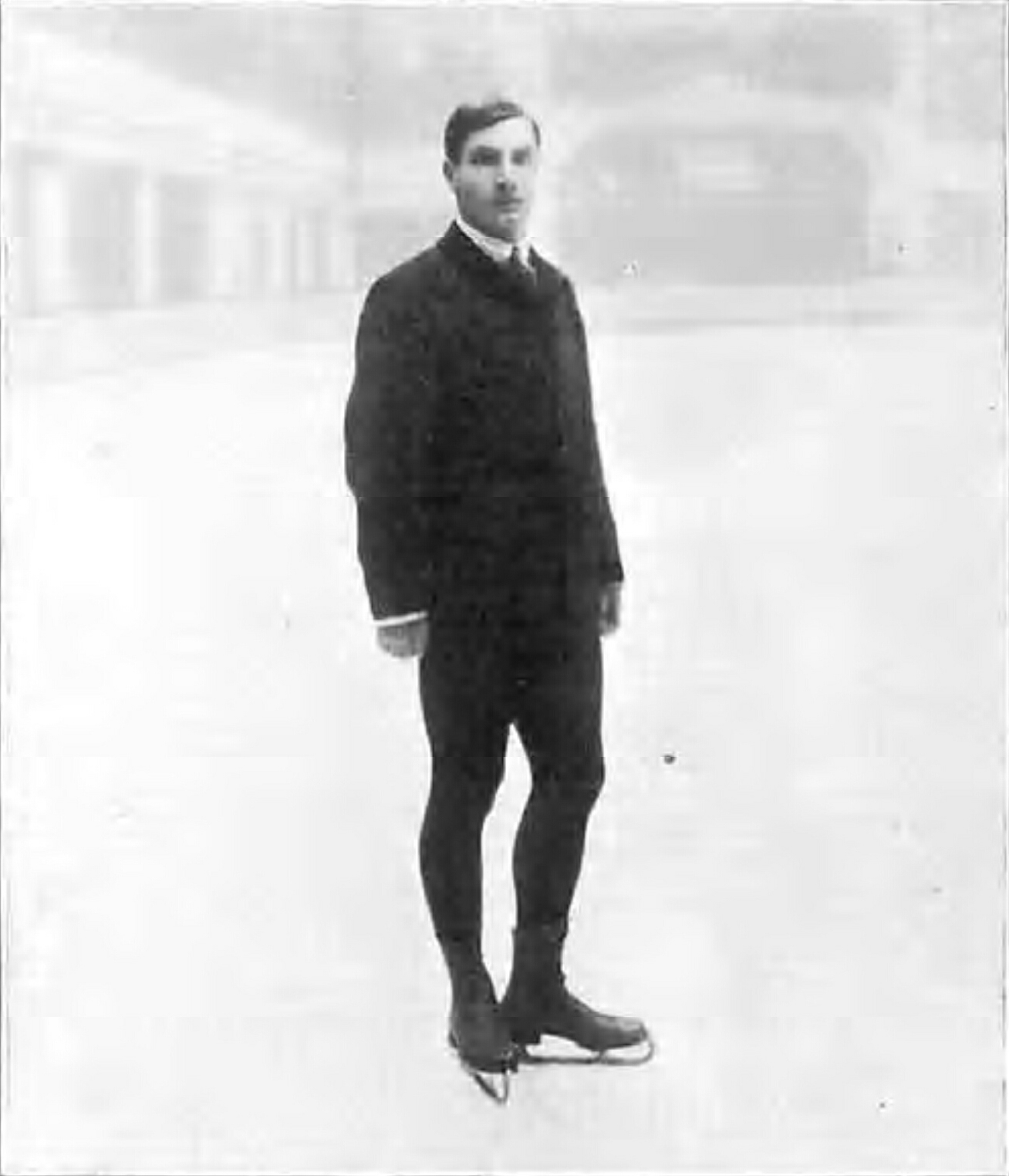
#14 - Ulrich Salchow

In 1909, Ulrich Salchow, a Swedish figure skater who won 10 World Championships, created the salchow. This jump takes off on the back inside edge and lands on the back outside edge of the other foot. This jump is known as a Salchow.
The first woman to perform this jump was Theresa Weld in 1920 at the Olympics.

Ulrich Salchow

Ulrich Salchow

#15 - Quadruple Salchow

The first quadruple salchow landed in competition was performed in 1998 by Tim Goebel at the Junior Series Final.
For women, the first quadruple salchow was landed in 2002 by Miki Ando at the Junior Grand Prix Final.

#16 - Werner Rittberger

In 1910, Werner Rittberger lands the first single loop.

#17 - Quadruple Loop

The first quadruple loop landed in competition was performed in 2016 by Yuzuru Hanyu at the Junior Series Final.
For women, the first triple loop was landed in 1968 by Gabriele Seyfert.

#20 - Alois Lutz

In 1913, Alois Lutz, an Austrian figure skater, performs the Lutz for the first time.
For women, the first triple Lutz was landed in 1978 by Denise Biellman.

#21 - Quadruple Lutz

The first quadruple Lutz landed in competition was performed in 2011 by Brandon Mroz.
For women, the first quadruple Lutz was landed in 2018 by Alexandra Trusova at Junior competitions.

Alexandra Trusova

Alexandra Trusova - by David W. Carmichael, CC BY-SA 3.0 , via Wikimedia Commons

#18 - First toe loop

In 1920, Bruce Mapes lands the first toe loop (and it is called a Mapes in artistic roller skating).

#19 - Quadruple Toe Loop

The first quadruple toe loop landed in competition was performed in 1988 by Kurt Browning at the World championships. It was the first quadruple jump ever.
For women, the first quadruple toe loop was landed in 2018 by Alexandra Trusova at Junior competitions.

You can learn more on the dates and evolution of jumps on this page.

Figure Skating gift banner
Figure Skating gift banner Zazzle 3
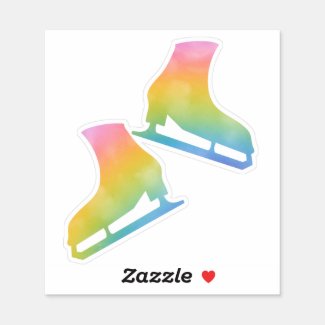
Sticker ice skates pair figure skating rainbow
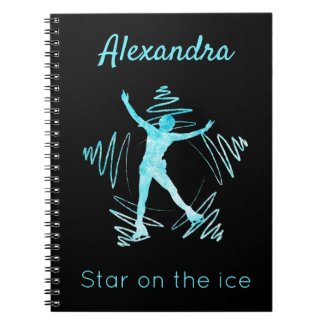
Figure skater notebook star on ice frozen blue
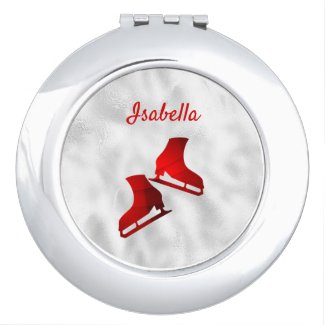
Ice skating mirror figure skates red silver
Personalize & Buy

HISTORY - Ice skating facts

#22 - Gender-mixed at first

At first, figure skating competitions were for men.
Then in 1902 the World Championships took place in London. Madge Syers, a female British figure skater, entered the competition and won the second place behind Ulrich Salchow.
Just a few years later, a separate division was created for women to allow them to have their own competitions.

#23 - The oldest Winter Olympic game

The first time figure skating appeared at the Olympics was during the London Games in 1908, that is to say the Summer Olympics. But it was held in October with 4 events.
Formally, the Winter games only started in 1924.
Learn more about figure skating at the Olympics.

Figure skating at the Olympics

Figure skating at the Olympics - by David W. Carmichael - davecskatingphoto.com., CC BY-SA 3.0 , via Wikimedia Commons

#24 - It could have started in the USA, but it did not...

Modern figure skating was imagined by American ballet dancer Jackson Haines in the mid 1860s.
However the Americans first did not appreciate his style of skating. He was incorporating ballet moves into the skating, which was before mostly technical drawing movements on the ice. Therefore, he traveled to Europe to share and teach it. And it developed from there.
It became popular in the US only after his death.

#25 - First Book

The oldest book identified that treats the subject of ice skating, dates back to 1772. "A Treatise in Skating" was written by a British man: Robert Jones.
In it, he describes how to choose skates, how to start skating and the techniques of the formal style of figures to be made such as figure eights.
You can purchase a re-edition is you are intrigued:

Figure Skating gift banner Zazzle 3
ice skating accessory gift banner
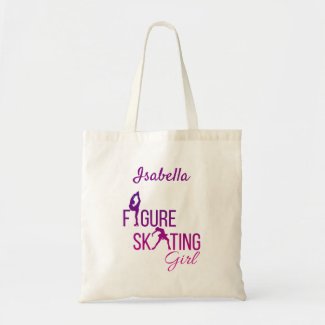
Tote bag Figure skating girl purple pink
Figure skater t-shirt star on ice pink red swirl
Necklace Figure skating girl red silver
Personalize & Buy

Share0
Tweet0
Pin0

You might also be interested in:
The 5 Figure Skating Olympic Events

Figure Skating Competition Checklist (to-do + packing)

Best synthetic ice for figure skating (+ is it a good idea?)

fun ice skating facts Pin2
interesting facts about ice skating Pin1

How to tie ice skates (figure skating)

Last updated on April 24, 2021

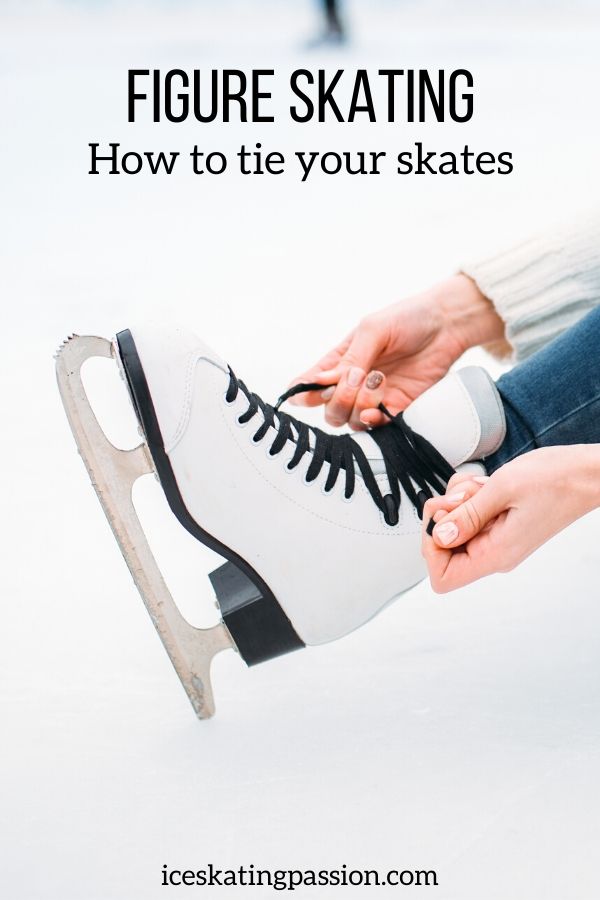
Let's learn more about how to tie ice skates. It is the first technique you should learn to help prevent injury and facilitate your learning process. Below are all the essential informations to learn on how to lace figure skates (yours or those of your kids): from position, to tightness and locking.

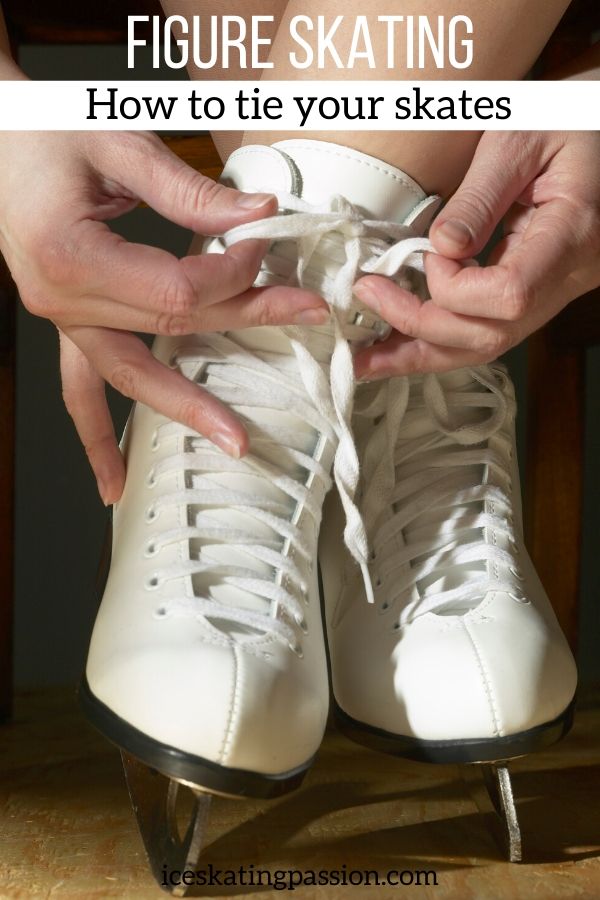
How to lace figure skate Pin3

Table of Contents
How to tie ice skates - summary
Best ice skate laces and how to set them up
The best position to tie figure skates - yourself or your kid
How to lace figure skates - the 8 steps
Should you use a lace tightener?

This article contains affiliate links. If you purchase using my link, I get a commission at no extra cost to you (learn more).


How to tie ice skates - summary

Why is proper lacing important?

Proper lacing ensures that your foot stays in a naturally locked position while you skate. Then:

  • you get the best possible performance - allowing the right movements inside the boot and blocking others;
  • you get proper support to prevent injuries;
  • you take care of your skates and avoid premature wear-out.

What not to do

There are a few tendencies which are hazardous and wrong practice which cause discomfort:

  • Tying them not tight enough is the commonest practice with parents who tie for kids. When the child starts on loosely tied skated the ankles are moving about in the shoe and they end up unsupported. This adds a lot of pressure on the ankles.
  • The opposite is true as well. Too tight everywhere on the skate and the skater cannot do any moves.
FB How to tie figure Skates

The overall rule

For specific way of lacing various sections of your figure skates, you may hear different opinions. However, the general rules of tightening are agreed upon:

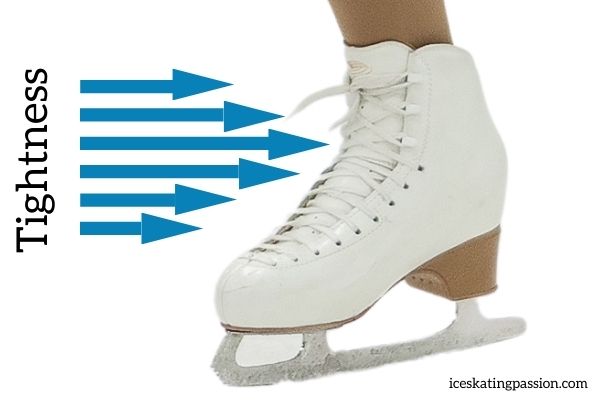
Slightly loose - Tight - Slightly loose

Which means:

  • slightly loose around the toes to allow for small toe movements inside
  • tight around the angle to lock it in place
  • slightly loose at the top to allow for flexibility

You will learn more about each of the 8 steps to tie ice skates in the following sections.

Of course, no lacing will fix the situation if the skate does not fit properly.

ice skate lacing how tight
Figure Skating Training journal Ad 1a
Figure Skating Training journal Ad 2

Best ice skate laces and how to set them up

Lace materials

The best laces are partlyt a personal preference. Some people prefer smooth, others prefer rough.

The classic ice skate laces are made of cotton
However, if your laces are too smooth and slipping around in the knots, try a nylon or cotton blend instead of 100% cotton. It is a personal decision and it might feel different & slip less.  

Classic cotton laces

Blend laces

Lace size

Make sure you have the correct size of laces. Don't choose too short as you need flexibility to tighten and don't choose them too long because you won't know what to do with the remaining laces at the top and there is a risk that one bunny ear catches a hook of the opposite skate and makes you fall (don't laugh, it happened to me)

How laces should be set up on skates – first use

They are 2 different ways to set up your laces on the skates. 

  • They both start the same way - enter both ends of the lace in the first eyes and center the lace
Start set up laces on ice skates
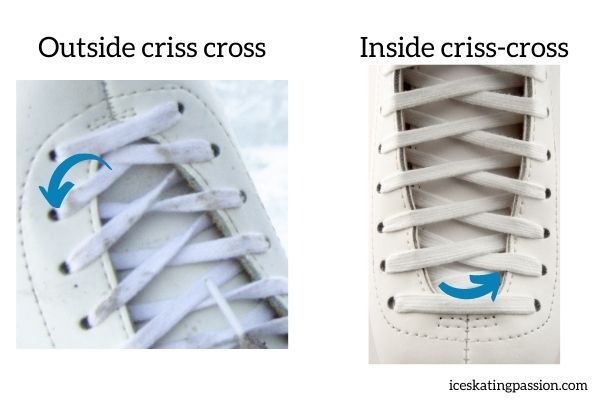
  • Then you have to criss cross through the eyelets but people disagree if it is better to insert in the eyelet from the outside or from the inside...
    Some say that inserting from the outer side of the eyelet is better, as it helps with self-blocking and lowers the pressure.
    Test both and choose what you prefer!
set up laces on figure skates 2

Always carry spare laces

This is something very important to have in your ice skating bag: a pair of spare laces. Laces tend to get damaged as they slide inside the eyelets and rob off the skates. At one point, you will end up with part of your laces in your hand as it breaks off. Make sure to always carry a pair of spare laces inside your bag, especially at competitions.

Figure Skating gift banner Zazzle 3
ice skating accessory gift banner
Ice skating t-shirt figure skates purple crystals
Ice skating luggage figure skates black white
Figure skater yoga mat silhouettes purple stars
Personalize & Buy

The best position to tie figure skates - yourself or your kid

Best Positions to lace: tying for yourself

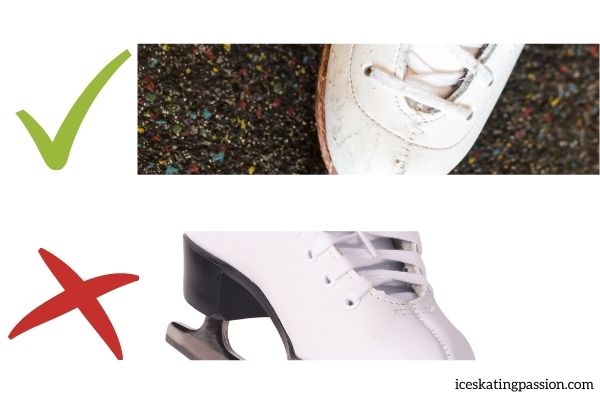
The most comfortable position is when you are sitting on a bench and your skate lays flat on the ground. Do not take your feet up to tighten the lace but keep them firmly on the ground and bend to tie. Lifting the foot will make things uneven and demand you more effort.

And remember that outside of the ice, your blades should be protected by skate guards.

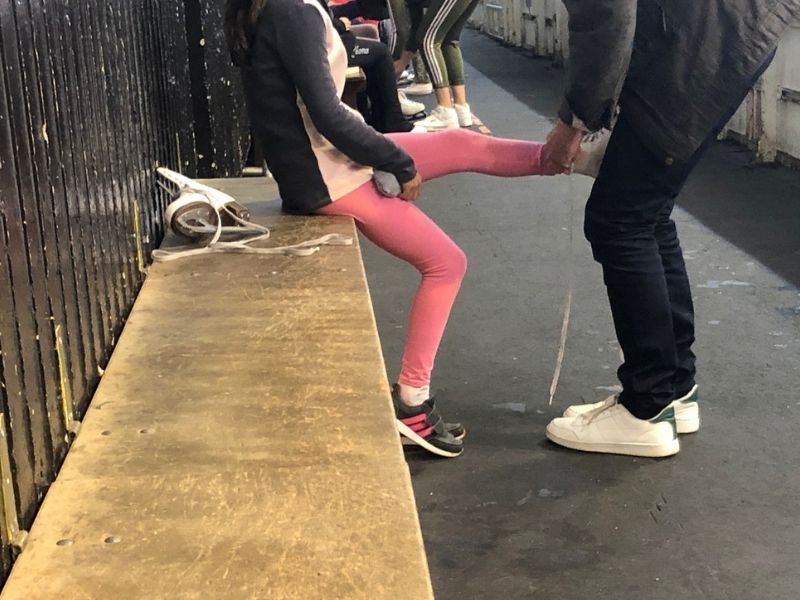
Best position to lace: tying your child’s skates

When you need to tie the skate for your child - choose the following position to avoid back pain and to make sure that the feet stay in position:

  • Have the child sit on a bench
  • Stand in from of him / her
  • Place the blade between your thighs (towards the knees)
  • Lace
figure skater mom beginner tip - tie ice skate

How to tie ice skates on your child


How to lace figure skates - the 8 steps

STEP 1 - Untie your skate all the way

When tying the laces, there must be a proper and comfortable protocol or set of habits followed for maximum effectiveness.
Before entering your foot, untie the skate completely and loosen the shoe, not merely the first two holes. The laces must be open and loose enough so that when you slip your foot in, it reaches the very end. 

Note: sometimes ice skating parents are in a hurry and skip this step, but they end up losing more time
Tip: since you should take the skates out once at home for them to dry out, open them very well to improve the process and to be ready for next practice.

STEP 2 - Tie the bottom - toe area

First check that the tongue is placed in proper alignment and not folded anywhere.

Start tightening the laces around the toes and work your way up the boot.
At the beginning, you must tighten a little. But not so much that your toes can't wiggle inside anymore.

Step 4 - Tighten the middle

The area where the ankle bends should be quite tight.
So, as the laces get out of the holes, give them a good tug. 
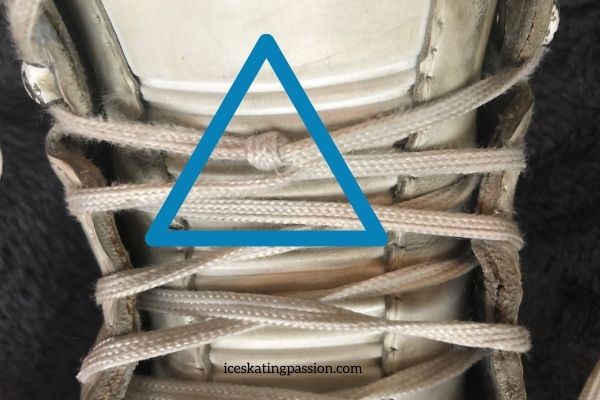
Then you need to secure the lacing, make a knot and add a half turn. It locks the lacing, and the ankle in the boot.

how to tie figure skate laces knot

Step 5 - Criss cross the top

Then criss-cross the laces around the hooks all the way to the top.
Make it tighter at the bottom and looser at the top.
Here again there are 2 schools: either turn around each hook from under or from over. You should try both and see what works best for you.

Make sure to leave room for the ankle to flex.

STEP 6 - Finish with a secure Knot

A firm double bowknot is recommended to secure your laces. This knot locks the laces in place and prevents sliding. 

STEP 7 - Walk a little and retie if needed

After your laces are done and the shoe fits snugly on the foot, you can walk around a little and feel the position of your feet in the skate. Re-tie if its uncomfortably tight or so loose your foot is sliding around the inside of the shoe.

The need to re-lace is higher if you feel the skate is too loose. Don’t get lazy and just leave it, but redo as it can prevent an injury. Unstable ankles are one of the first causes of injuries.

Figure skates should never be too tight. If you have stiffness bending your knees, go back and re-tie them. Make sure the skate tongue is properly aligned and straight and does not slip under the laces.

STEP 8 - Take care of the lace ears and ends

What to do with the hanging lace ends and loops?

  • They should never hang around or touch the ice
  • If they are too long - Never wrap extra laces around your ankle or boot (it prevents from bending). Buy a shorter pair. 
  • I do recommend wearing either a long legging over the boot, or a skate cover or a leg warmer. This way the loops are not flying and do not risk catching the hook of the opposite skate.

See the many colors and design

See the many colors and designs for boot covers

See the many colors


Should you use a lace tightener?

Overall, I am not a big fan of lace tighteners because it makes is harder to balance to tightness.

However, laces do damage your hands especially when they are dry (in the cold ice rink).
And lacing with your bare hands can start hurting.
In that case a tightener can be the solution for you.

Get it on Amazon

Get it on Amazon

Figure Skating gift banner Zazzle 3
ice skating accessory gift banner
Tote bag Figure skating girl purple pink
Figure skater t-shirt star on ice pink red swirl
Necklace Figure skating girl red silver
Personalize & Buy

Share0
Tweet0
Pin0

You might also be interested in:
The 5 Figure Skating Olympic Events

Figure Skating Competition Checklist (to-do + packing)

Best synthetic ice for figure skating (+ is it a good idea?)

How to tie figure Skates Pin2
How to tie ice Skates Pin

Best ice skating gloves (leisure and figure skating practice)

Last updated on June 15, 2022

Protecting your hands is essential at the ice skating rink. 
But what types of ice skating gloves should you choose?
Below are my tips to help you select the best figure skating gloves for your type of practice as well as suggested gloves to purchase.
Skate safe and warm!

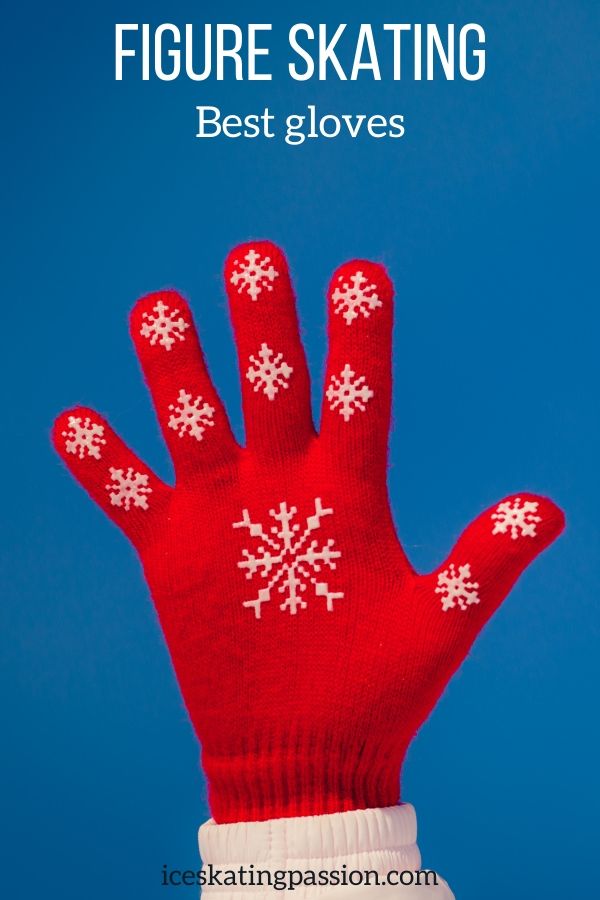
best ice skating gloves Pin (1)

Table of Contents
Best ice skating gloves - summary
Criteria to choose your figure skating gloves
Reviews - Recreational ice skating gloves 
Reviews - figure skating gloves for practice
Review - ice skating gloves for toddlers and young kids
Figure skating gloves for competition

This article contains affiliate links. If you purchase using my link, I get a commission at no extra cost to you (learn more).


Best ice skating gloves - summary

The choice for best ice skating gloves depends on your needs. Below is my top selection of gloves to wear when ice skating, if you don't want to read the whole article.
However, you can find more information below with the criteria to choose the best option for you.

  • Best gloves for leisure ice skating for kids and adults

Main criteria for choice - not bulky, warm, water-resistant, touch screen

For kids (6-12) - Get them on Amazon

For teen and adults - Get them on Amazon 
(women and men)

  • Best figure skating gloves for protection during practice with jumps

Main criteria for choice - protection pads, warm, water-resistant

Read reviews / Get them on Amazon

  • Best figure skating gloves for warmth and practicality

Main criteria for choice - thin, warm, water-resistant, flexible and elegant for beautiful lines

Read reviews / Get them on Amazon

  • Best ice skating gloves for toddlers

Main criteria for choice - comfortable, warm, fun design 

Get them on Amazon

  • Best ice skating gloves to skate outside

Main criteria for choice - warmer and waterproof but bulkier

Get them on Amazon

Figure Skating Training journal Ad 1a
Figure Skating Training journal Ad 2

Criteria to choose your figure skating gloves

Why do you need gloves for ice skating?

Gloves are one of the main ice skating equipment pieces to take to the rink and an essential part of your figure skating training outfit. There are 2 main reasons to wear gloves when ice skating:

  • to keep your fingers warm - the rink can be cold. Some people will not have cold hands, but most will.
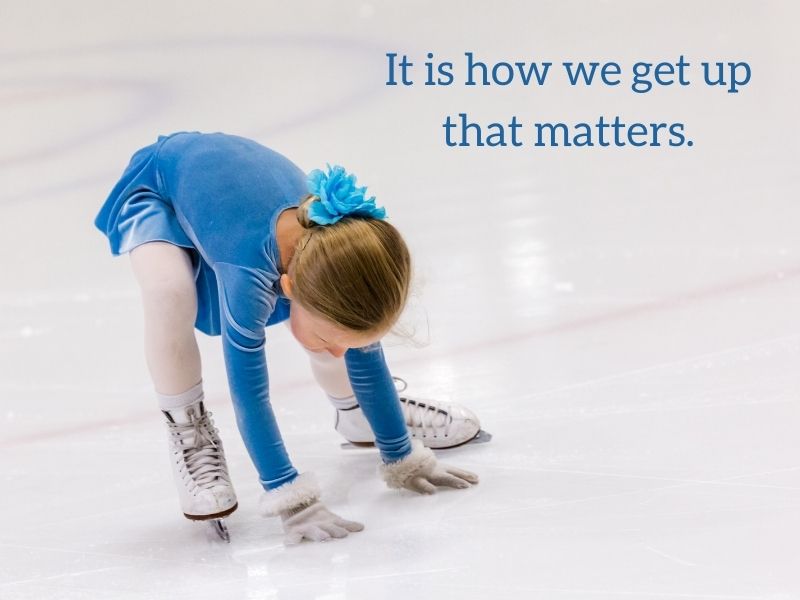
  • to protect your hands when you fall - it is quite frequent to fall when ice skating. It is a slippery surface! LOL. To catch yourself and to stand back up you will have to put your hands on the ice. It is much better when wearing gloves

The type of gloves really depends on what sort of ice skating you do and what your priorities are.

Get back up spirit figure skating benefit

Warmth / thickness

First of all, you want gloves that are warm. Otherwise there is no point in wearing them...
But, you don't want bulky gloves. You are not skiing. You don't need ski gloves.

  • As a beginner, your whole body plays a role in your balance, including your hands. 
  • In practice class, bulky gloves prevent from creating beautiful lines

Water resistance

In case you fall on the ice, you also want a material that is water resistant. Not completely waterproof because you normally don't stay with your hands on the ice, but something that will not get your hands wet as soon as you touch it. 

However, if you are skating outside and it is raining or snowing, you may want fully waterproof gloves.

Material to be avoided: leather - it does not like being wet.

Protection

All gloves add a layer to your hand and will protect you against potential cuts from blades (typically superficial).
However, as you practice for more and more tricks on the ice, you may be falling more and more.
In that case, it is a good idea to protect your hands a bit more. A few pairs of gloves have been designed with pads for that purpose.

Comfort / practicality

As I said, you don't want something bulky. 
Plus, a comfortable pair of gloves would make the ice skating experience more enjoyable.

And, if you are a leisure ice skater, you may want to use your phone while on the ice, to take pictures for example. In that case you can find gloves with a touch screen system. This way you don't have to remove your glove every time you want to use your phone. 
Note: always check reviews about the touch screen functionality. Some gloves list the feature, but sometimes users report it not working properly.

Design

Design can have a place in your selection, of course. In figure skating and especially ice dancing, beautiful lines are important.

And if you are looking for ice skating gloves for a toddler, design can be a fun way to make him/her wear gloves. Some toddlers don't want to sometimes. But having superheroes, ballerinas or animals on them can help.

One note about design though:
Avoid gloves with rhinestones!!!! They can fall on the ice and be dangerous for all skaters. Rhinestones should be only for competitions.

Anti-slip - not really

In theory, except for the water bottle when hydrating, you won't have to hold anything when practicing ice skating. The anti-grip systems are not necessary.
But because most thin warm gloves are also made for biking, most of them will have some kind of anti-grip system.
It is not an inconvenience. But it will only be useful to you when you hold your water bottle.

Note for pair skating

Wearing gloves when skating in pairs is not a good idea – it makes the grip slippery. If you are doing simple skating and no lifts, you can wear gloves but choose a material that is not slippery. 

Figure Skating gift banner Zazzle 3
ice skating accessory gift banner
Ice skating notebook figure skate rainbow black
Phone case Figure skating girl gold icicle
Ice skate Necklace figure skater red silver
Personalize & Buy

Reviews - Recreational ice skating gloves 

Indoor rink

For kids (6-12) - Get them on Amazon

For teen and adults - Get them on Amazon 
(women and men)

As discussed earlier, if you are ice skating for leisure in an inside rink you want gloves that are:

  • not bulky
  • warm
  • a little water resistant
  • (with touch screen capability)
  • (and maybe nice looking, if you are on an ice skating date...)

Those options, for kids and adults, meet those criteria.
Materials for adult pair: Material: spandex, lycra, microfiber, conductive fabric & silicone.
Users report good warmth and comfort.

Outdoor rink

Get them on Amazon - for kids outside

The gloves for the indoor rink can also be used outside. However, if you or your kid are skating on a pond or lake, the temperature will most probably be lower and you may have wind and rain.
In that case, I suggest going for gloves that are a little bulkier but warmer and waterproof. You will be better protected.

Your lines will not be as pretty, but I think protection is more important. Don't you?


Reviews - figure skating gloves for practice

If you are practicing tricks or taking lessons, then you might be looking for other gloves to enter your figure skating equipment pack.
Below are 2 options:

  • The first one: gloves are quite thin for an elegant hand - this is important to not break the lines your body is creating visually
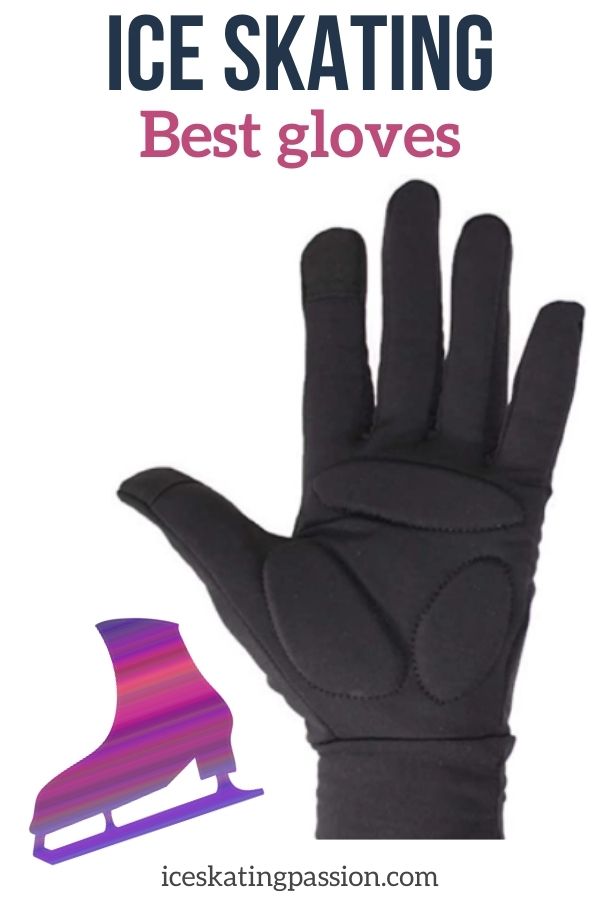
  • The second one: gloves have added protective pads strategically placed to protect your hand when you fall

Read reviews / Get them on Amazon

The gloves above are liners. They can be used inside ski gloves to make them warmer. But they are a great option for figure skating practice because they are thin and light yet warm.

Read reviews / Get them on Amazon

As soon as your start jumping, you will fall a lot and catch yourself with your hands.
In that case those padded gloves will give extra protection and might prevent bruises. They can be a great gift for figure skaters.

However, note that parents can get those even when the kid is only starting and not really jumping. The glove is not bulky so it can be used all the time. And you may feel better that your kid is protected in case of a fall.

Check out more suggestions about figure skating protective gear.


Review - ice skating gloves for toddlers and young kids

For very young kids, you won't find many different materials for the gloves. They are mostly cotton and acrylic.
But it is sufficient to start with. However, note that they are not really water-resistant so, if the rink is melting a little, your kid may have wet hands if he/she falls a lot.
I think the most important is that the toddler wants to wear them. Because of that, design plays a very important role.
You can find many designs, such as these:

Get them on Amazon

Check out this article for more tips of how to ice skate with a toddler.


Figure skating gloves for competition

Figure skating mum, if your kid is joining a figure skating competition, you may want to add a glove to give the outfit more effect.
Normally, it is better to create a glove with the same fabric as the costume.
However, you may have bought the dress complete and are looking for a way to increase the visual effect.

In that case you need neutral colors:

Get them on Amazon

Get them on Amazon

Figure Skating gift banner Zazzle 3
ice skating accessory gift banner
Figure Skate blade Towel Axel in life pink glam
Ice skating pillow - Pink Born to ice skate
Ice skating notebook live on edge blue silver
Personalize & Buy

More articles about figure skating:

  • The essential pieces of figure skating equipment you need - read article
  • Gift for figure skaters - 50 ideas - read article
  • Best ice skating bags to carry your skates - read article
  • Best ice skate towels to dry out blades - read article
  • Best Figure Skating Protective Gear - read article
  • Figure skating training clothes - tips + 5 looks - read article

Share it on your favorite social media!

best figure skating gloves Pin3
best Ice skating gloves Pin1
  • « Go to Previous Page
  • Go to page 1
  • Interim pages omitted …
  • Go to page 8
  • Go to page 9
  • Go to page 10
  • Go to page 11
  • Go to page 12
  • Interim pages omitted …
  • Go to page 19
  • Go to Next Page »

Footer

As an Amazon Associate I earn from qualifying purchases. IceSkatingPassion.com is a participant in the Amazon Services LLC Associates Program, an affiliate advertising program designed to provide a means for sites to earn advertising fees by advertising and linking to Amazon.com, Amazon.uk and Amazon.ca

Disclosure / Terms of use / Privacy Policy

Site en Français

Copyright © 2026 IceSkatingPassion.com · Log in

If you continue browsing this site we assume you agree with the use of cookies in this website.